
RYANRAYNEFF
Web Application Development Exit Portfolio
Course Studies
Introduction to Graphic Design
Syllabus
Graphic design, its history, imaging and the elements and principles of digital design in visual communication. An introduction to computer graphic design production tools and processes in visual illustration.
The instructor, Minh Carrico, gave me a strong foundation in graphic design that really carried over well to Web Development. He drilled into me the fundamentals of “Emphasis”, “Hierarchy” and “Negative Space”. Those are the three key principles of design, everything else is decoration. I’d been studying graphic design independently for years before taking this class, but without realizing it, I’d been only learning the tools, but not the underlying principles. This principles I learned in this class were the great “unknown unknowns” that I’d been missing in my work.
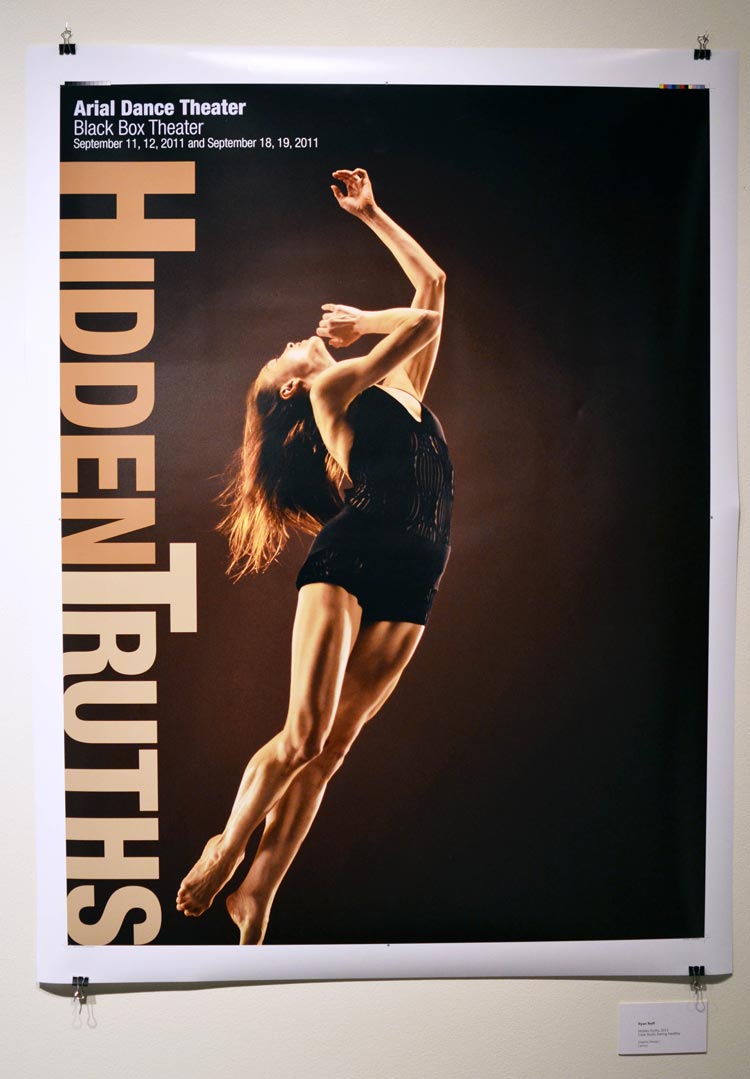
Hidden Truths Poster
This was a delightful exercise in composition. We were provided the imagery, and composed the typography to compliment the underlying theme of hidden truths.
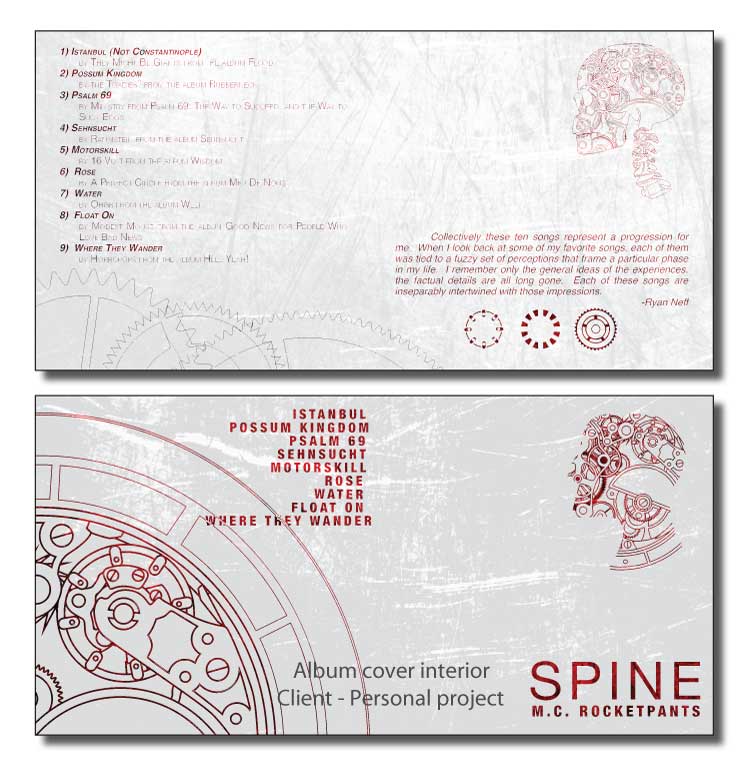
Album Cover
We made a "mix tape" of some of our favorite songs, then put together an album cover that supports the common theme.

Album Cover Closeup
This was made using Adobe Illustrator to generate the clean linework, and then texture was added via illustrator blend modes to add complexity and depth.
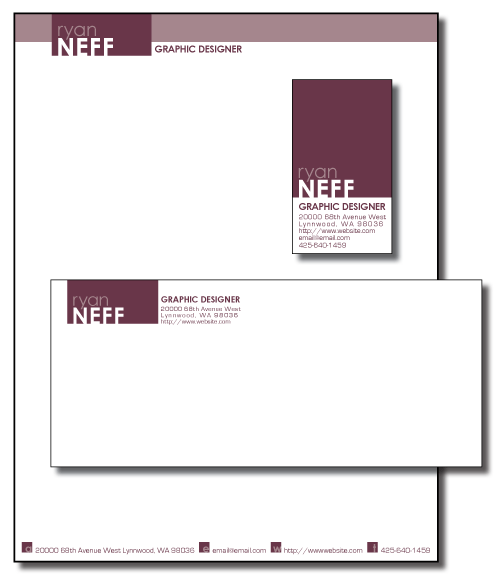
Personal Branding
We designed a logo, business cards, letterhead and envelopes for our own personal brand.
Systems Analysis
Syllabus
A practical approach to real world systems analysis and design. Includes the systems development life cycle, structured methodologies and project planning. A case study project is analyzed, requirements are written and a systems design specification document is prepared.
This was my first introduction to the System Development Lifecycle (SDLC). We worked in teams throughout the quarter to plan the first three stages of the SDLC for a fictitious Vendor Payment Processing System. As well as contributing to the documentation content generation, I was also responsible for the visual design of the project deliverables.
Systems Design and Development
Syllabus
Provides hands-on experience in systems design and implementation using a prototype approach. The case study is designed and tested using application development software. User manuals are written.
This course picks up where the Systems Analysis course left off. We worked in teams again to complete the remaining phases of the SDLC for a fictitious Vendor Payment Processing System. Again I was responsible for my share of content generation, as well as the visual design of the documentation deliverables. The final project was created in Microsoft Access. Access is outside the scope of the Web Dev program, so I was able to contribute by establishing design guidelines for the final program, as well as creating the users manual.
JavaScript (Web Development II)
Syllabus
Continuation of concepts and practice introduced in CIS 241. Topics include: embedding, inline and external scripts, functions, form validation, loops, conditional statements, strings, numbers, and DHTML.
This course covered the fundamentals of Javascript. Beyond the fundamentals, we learned about loops, cookies, and Regular Expressions. I was able to implement these fundamentals in the final project, which was a pizza parlor website. We were provided some basic jQuery to start with, and the javascript was added to complete the functionality. We also had to add the CSS and all branding.
Introduction to PHP (Web Development III)
Syllabus
Topics include: Server-side scripting for web pages using PHP. Students will learn fundamentals of PHP scripting including functions, logical structure, and database connectivity used in creating web sites.
As well as the fundamentals of PHP, we got a chance to explore Restful API’s, as well as the PHPStorm IDE. For the final project, we worked in groups and used a compressed version of the Systems Development Lifecycle, to generate documentation for a website. The website is a revised version of the Pizza Parlor site that we created for the Introduction to Javascript course. The instructor for this course, Tessa Merro, was also the person who got me interested in Joomla!, and by proxy Bootstrap. I was really trying to impress her, so I rebuilt the final project from scratch using the Bootstrap framework. The site is fully responsive, and can read and write to a SQL database using PHP.
Introduction to Search Engine Optimization (Web Development IV)
Syllabus
An introduction to Search Engine Optimization and content management for the web. A step-by-step approach to organic and paid search engine optimization. Learn about free statistic collectors and what makes a web site move up in placement.
As well as learning the fundamentals of SEO, part of the quarter is devoted to the CMS Joomla!. This class got me hooked on Joomla!, and I’ve built three more Joomla! based sites since. For our final project, each student built a site for the local non-profit “Autism Outreach Foundation”. Of the 44 students who built sites, mine was chosen by the foundation to be the site that goes live. The site is up and in use, and can be seen at www.autismoutreachfoundation.org.
Introduction to Cascading Style Sheets (Web Development V)
Syllabus
Students will learn the details required to combine CSS (Cascading Style Sheets) with HTML, XHTML, or XML to create rich, powerful web sites. Topics include: selectors, cascade and inheritance, text and font manipulation, layout, and positioning.
This gave me the foundation for truly beautiful and modular web design. We covered all the basics of CSS, and for the final project coded a site from scratch that would match the printed visual identity of a ficticious company. CSS was one of the most useful skills I learned at EDCC. As I progressed through the WebDev program, I’ve found separating my code from my design to be absolutely crucial. Take this site, for instance. It’s built on the Bootstrap framework, and uses the power of the “cascade” to customize the styling.
JavaScript Frameworks (Web Development VI)
Syllabus
Students will investigate and use the advanced techniques available in JavaScript Frameworks (libraries) such as JQuery, AJAX, MooTools and Prototype.
Building on the basic javascript knowledge we took from the Introduction to Javascript course, we learned all about Javascript libraries. jQuery, jQuery UI, and FancyBox are my three favorites. An earlier version of this Exit Portfolio was built as a final project for this course. This sites navigation uses both jQuery and jQuery UI that are included in the Bootstrap framework. FancyBox was added to allow those neat modal windows.
Database Theory and Design
Syllabus
Designed to recognize data as a business resource. Database models are discussed from both a programmer’s and a user’s viewpoint. Roles of database designer and administrator will be examined.
This course taught me the fundamentals of database theory. I now know what the difference between a spreadsheet and a database are. I can identify database entities and attributes, construct an entity relationship diagram, and then normalize the data to 4th Normal form. (Also known as “Boyce Cod Normal form”) I was able to use these database fundamentals to build the SQL databases for several other sites that I built during the WebDev program.
Project Management I: Project Scope/Requirements
Syllabus
Learn the basics of working in a project team. Students create plans that identify project scope, constraints, stakeholders and risks, then explore customer needs and requirements. Includes an introduction to scheduling. Team and communication skills strongly emphasized.
This course introduced me the basic principles of Project Management. To apply these principles, we as a class, spent the quarter putting together a “Best Use Study” for the Edmonds Senior Center. My role on the team was as the lead designer. I integrated all the reports into a single document, and then made it pretty. Coordinating multiple files with multiple revisions between 23 people was a learning experience in and of itself. It quickly became apparent that Asset Management Guidelines were vital, so I established the guidelines and enforced them with an iron fist. The project was delivered on time to the client. The Edmonds Senior Center used the report to help them lobby for funding to build a new facility.