. Exit Portfolio .
Courses
With the knowledge from these 10 courses I've taken at Edmonds Community College,
I'm able to design, build and develop websites to keep fuctioning properly.
ART 225 - Introduction to Graphic Design
Description Graphic design, its history, imaging and the elements and principles of digital design in visual communication. An introduction to computer graphic design production tools and processes in visual illustration.
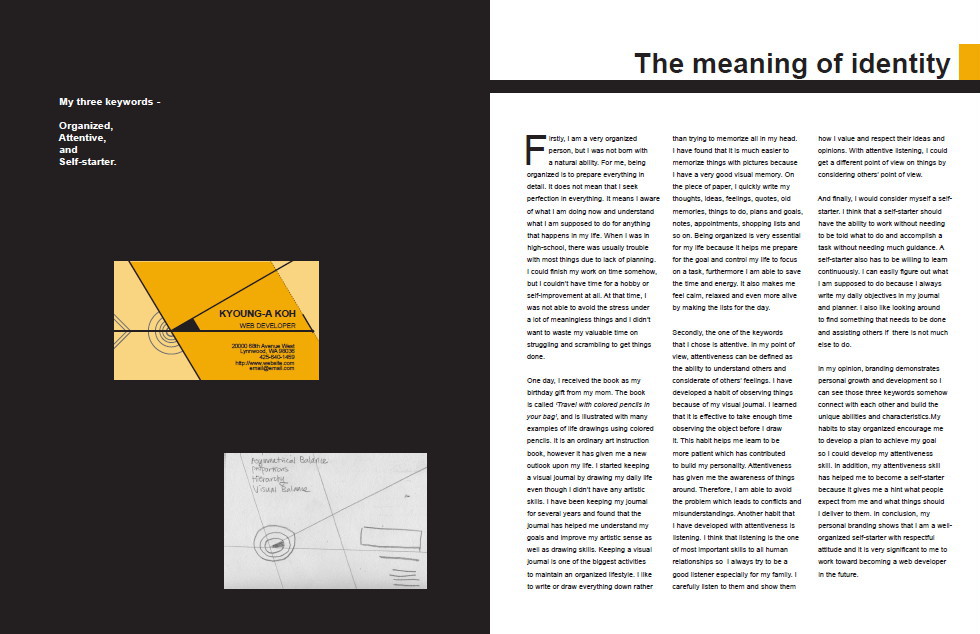
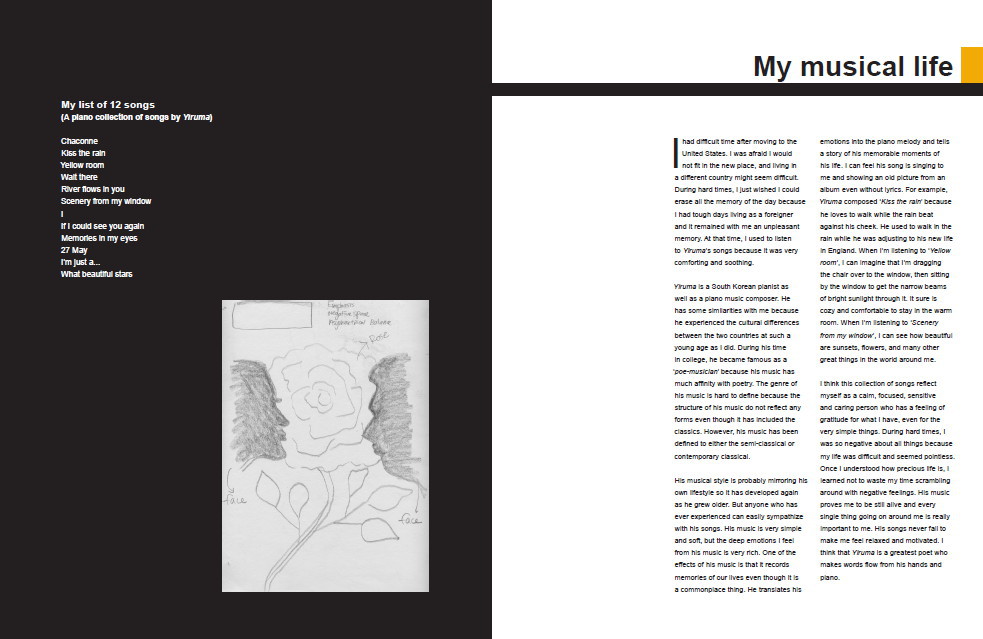
What I learned I found the Swiss Design is very interesting. It has encouraged me to change my perspective in design and layout more easygoing and has helped me think more logically. One of concepts that I like about the Swiss Style was simplicity. A very simple design with geometric shapes and different color combinations draws a strong attention and delivers the message in a very clear way. From the Swiss Design, I learned that how to remove the unnecessary things and emphasize the necessary things in a minimal design. I also realized how important it is to design for functionality and efficiency.
*click to enlarge image*


CS 115 - Introduction to Programming
Description An introductory course in programming using VB.NET. No previous programming experience is expected. Topics include designing, creating and debugging interactive, event-driven programs with a graphical user interface and developing problem solving skills.
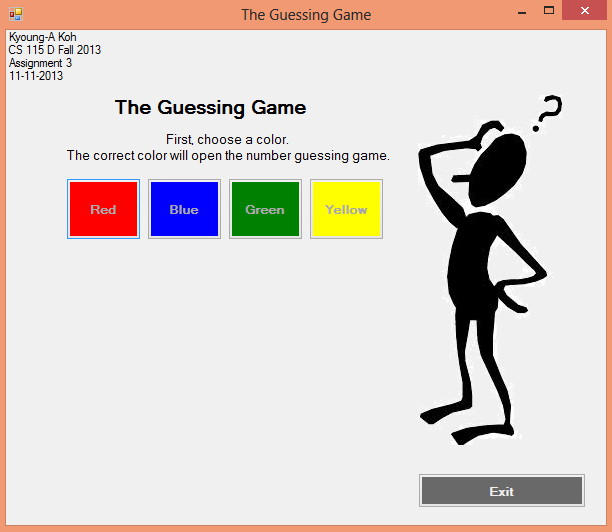
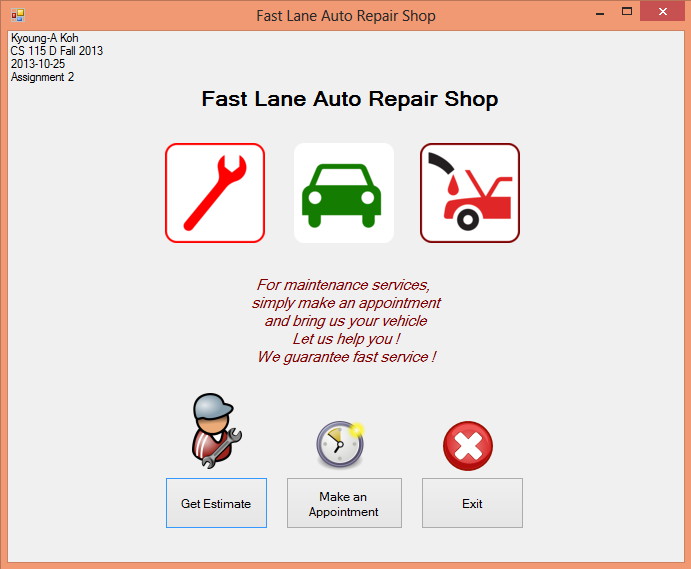
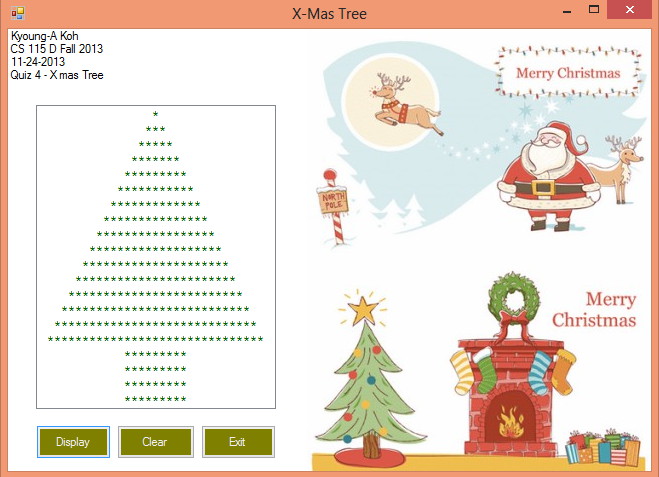
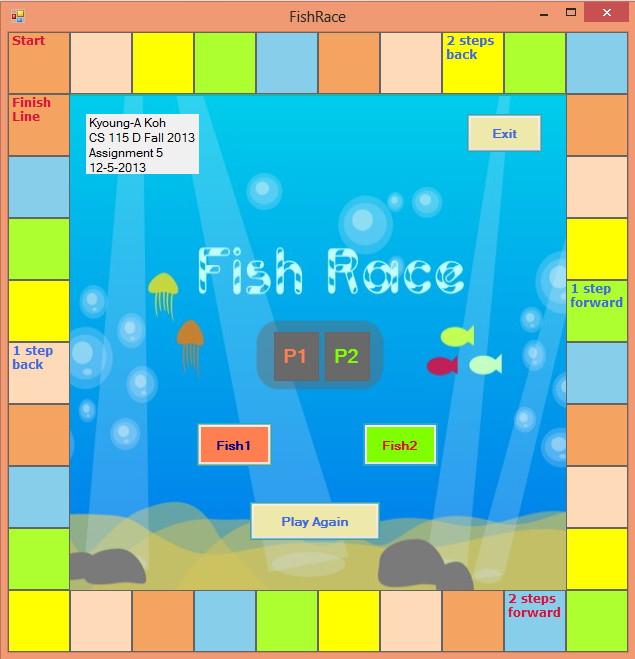
What I learned In this class, I learned how to use the Visual Basic language to create a simple application such as calculators, boardgames and even a christmas card. Before developing an application we started out with the planning phase that included purpose, input, process and output. The most memorable project was 'A Guessing Game'. This project used the 'Random' class to generate a number between 1 and 100 so that the user can guess what the number is. Through this project, I realized that it is important to make the interface understandable as well as the output for the user when developing an application. Also a test plan including explanations and reasons for each test is a very important part of developing process.
*click to enlarge image*
CIS 241 - Web Development I
Description Internet and intranet Web site development using XHTML approached from a source code perspective. Covers tags, forms, linked objects, CSS, frames, tables, and introduction to the use of scripting. Students build multi-page Web sites.
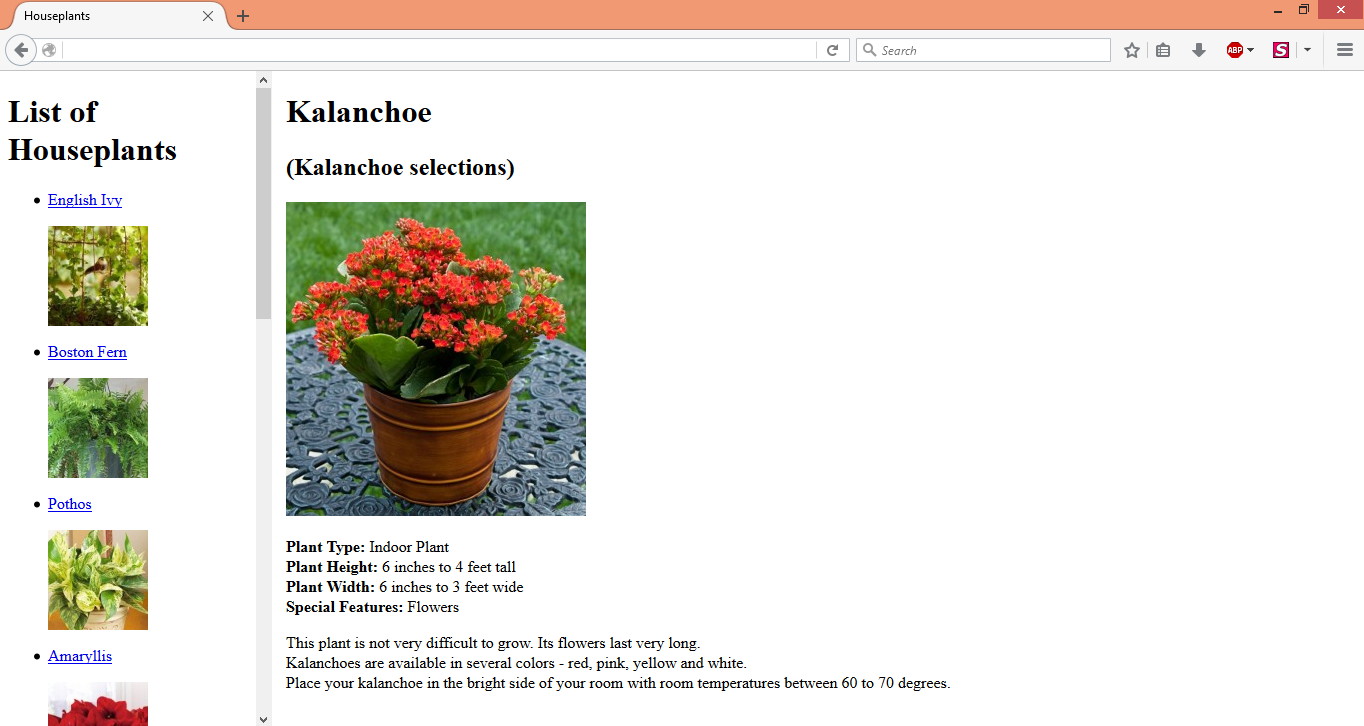
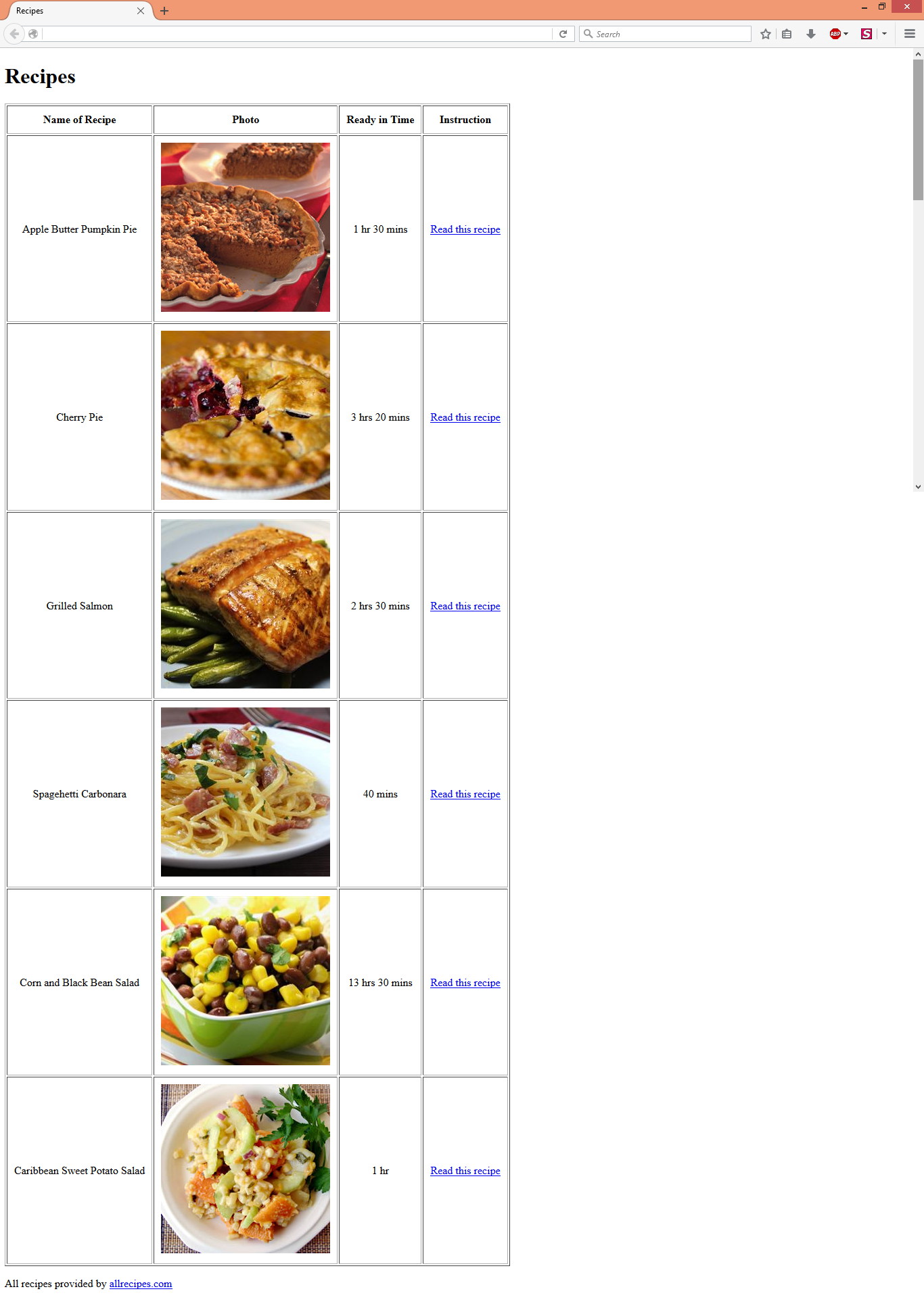
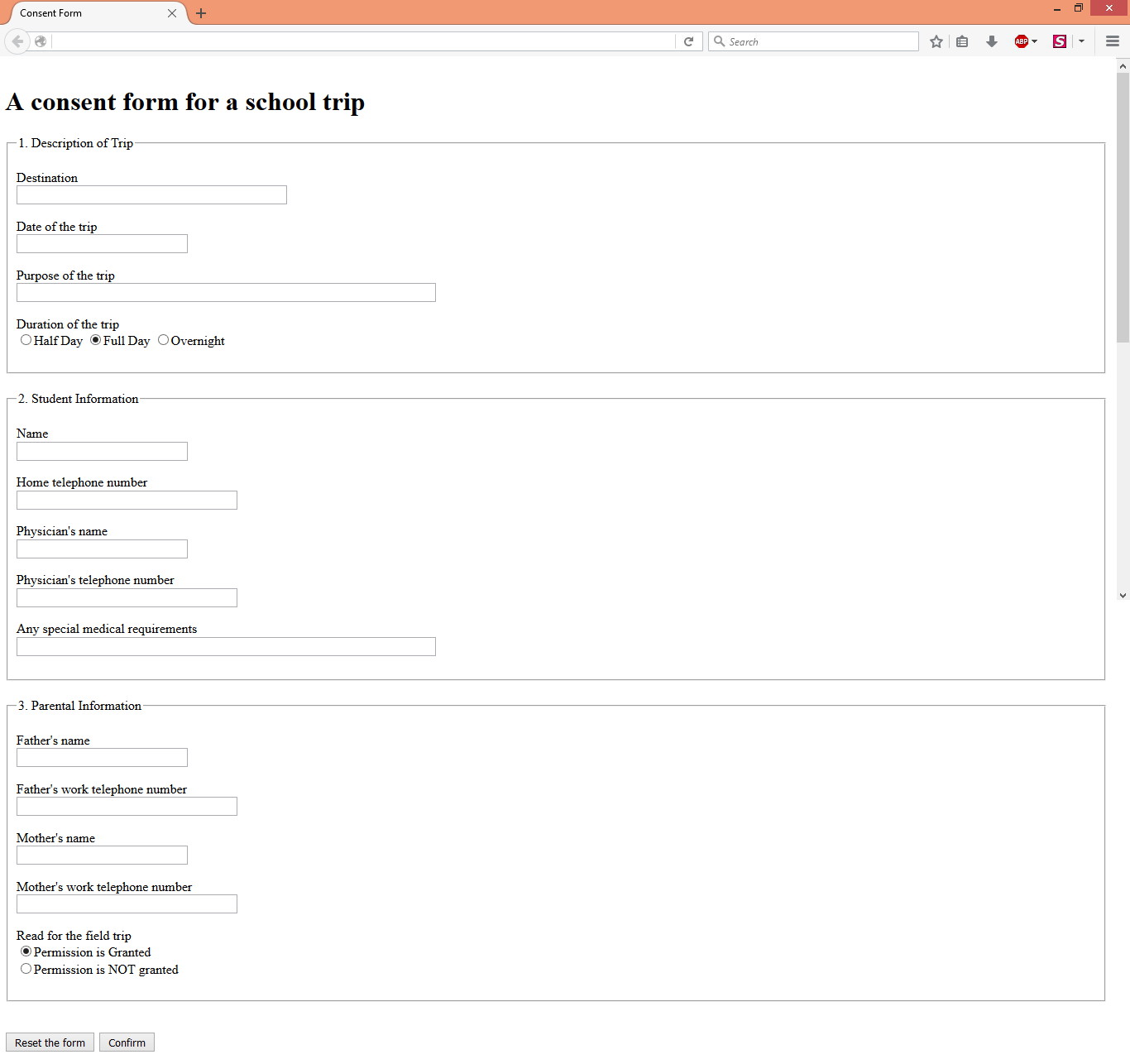
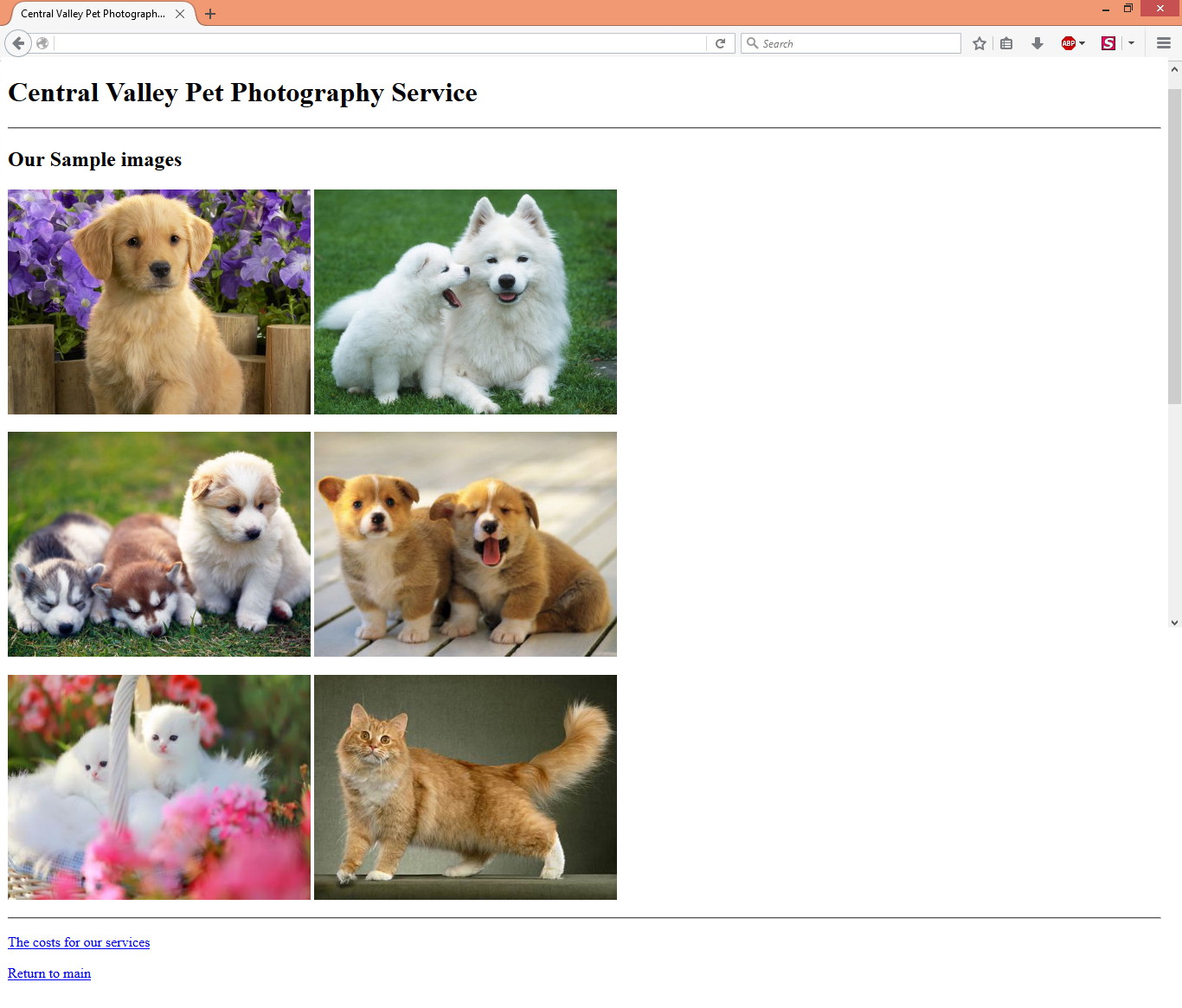
What I learned This class was all about HTML/XHTML. I learned how to use the basic principles of web documents to create a website with frames, tables and forms. This class helped me to learn HTML code, the user-friendly design and content as well. I found that the validation process for checking HTML documents is the most significant factor to web builders.
*click to enlarge image*
CIS 242 - Web Development II: JavaScript
Description Topics include embedding, inline and external scripts, functions, form validation, loops, conditional statements, strings, numbers, DHTML, and an introduction to JavaScript Frameworks.
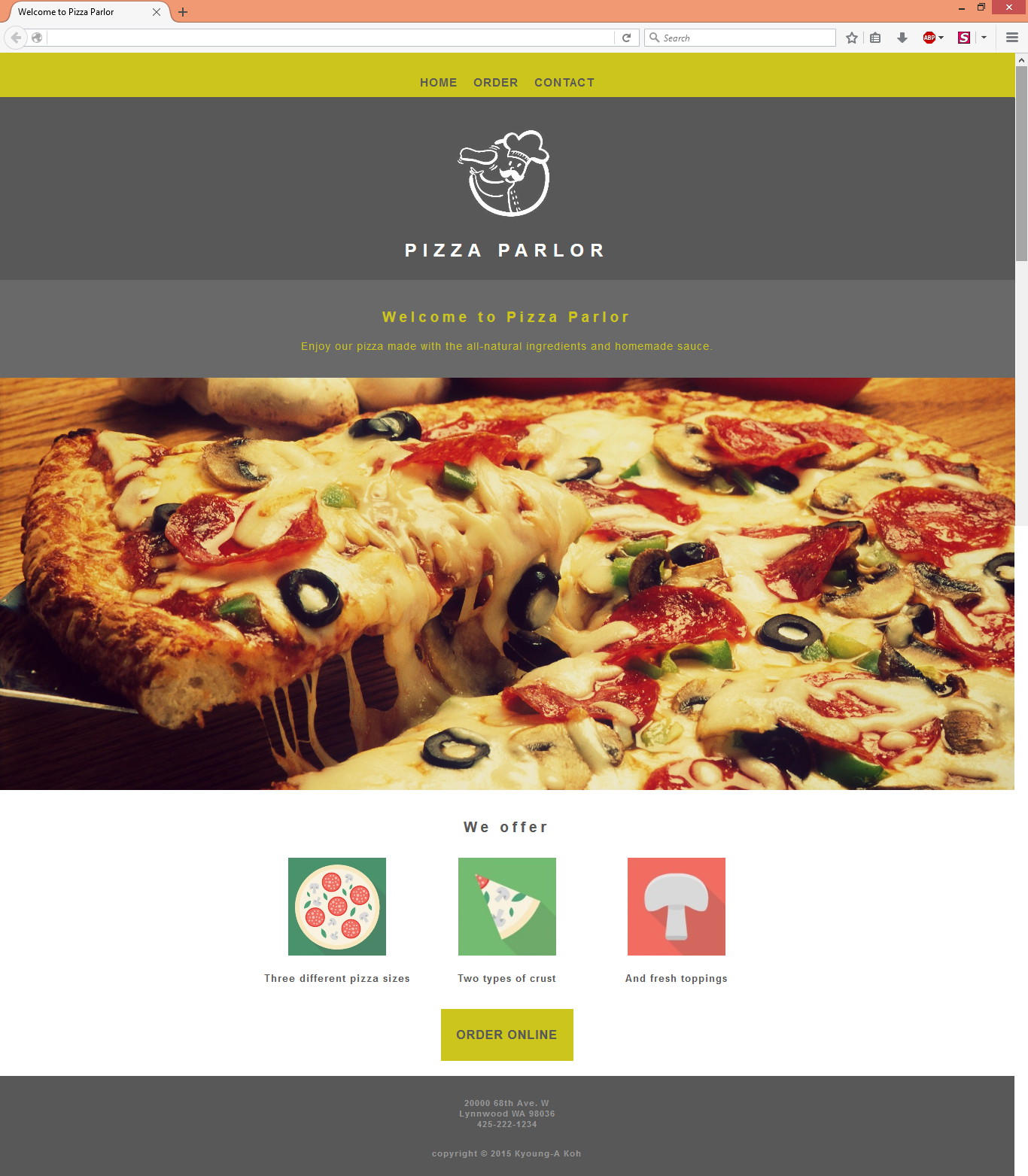
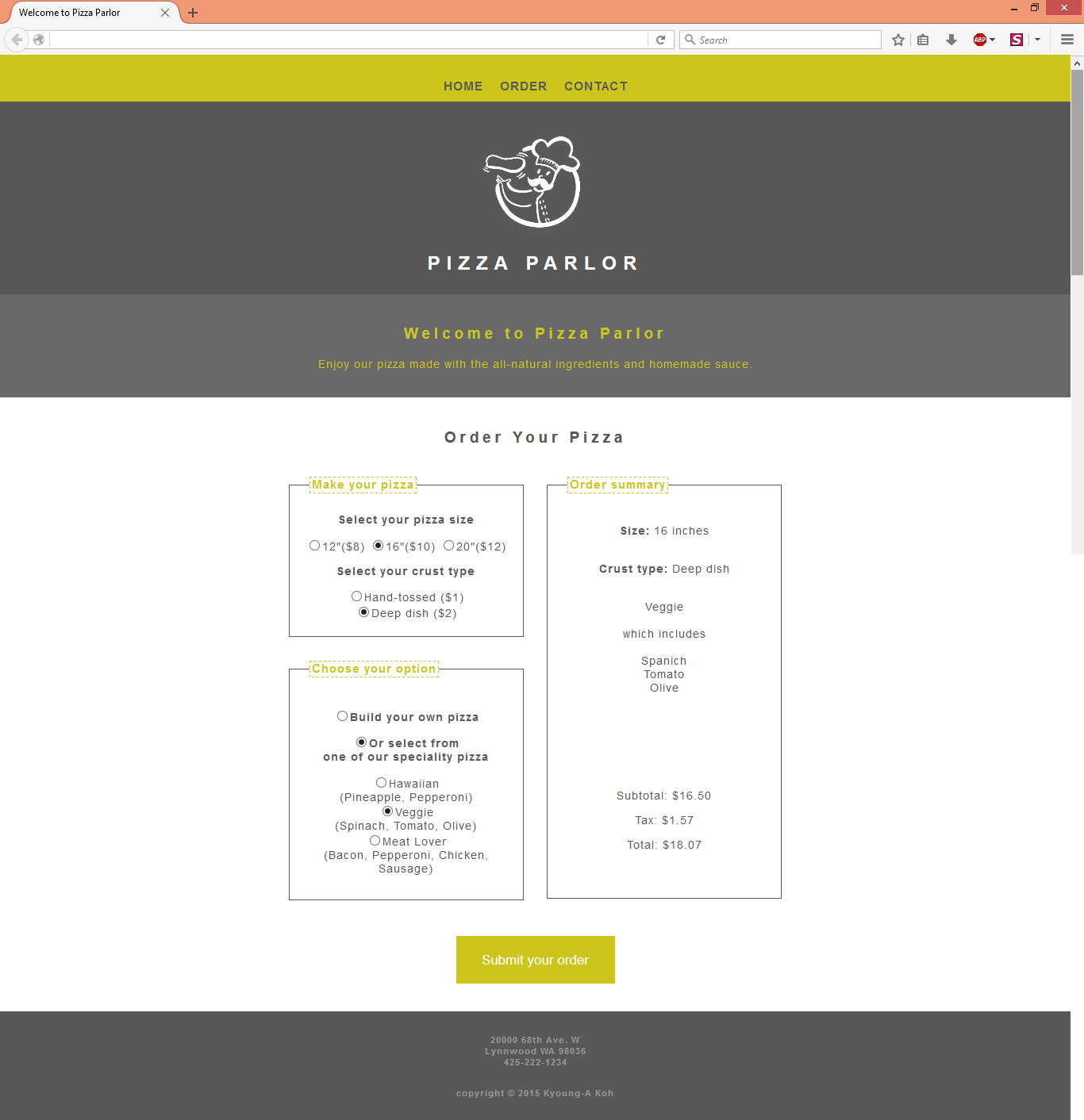
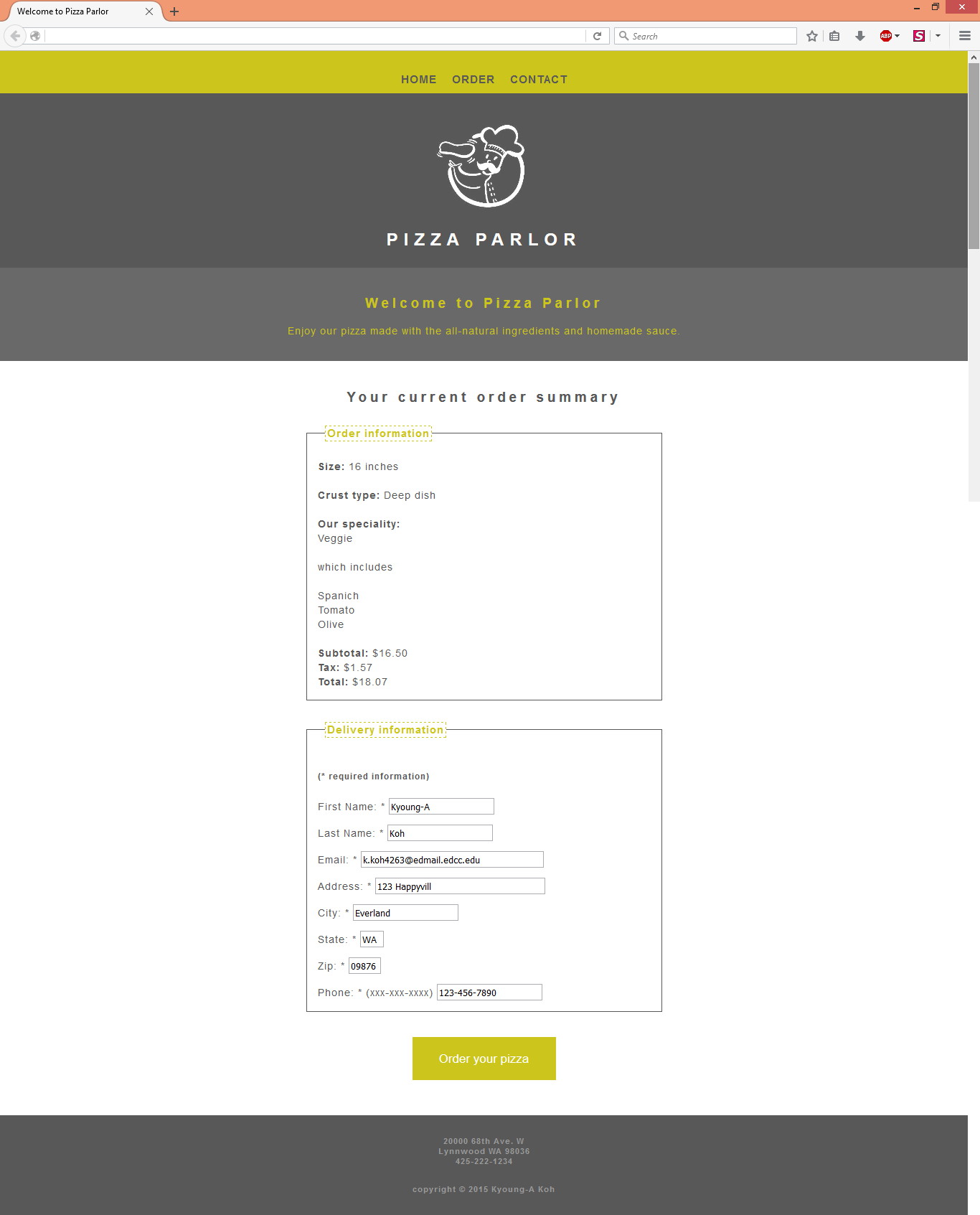
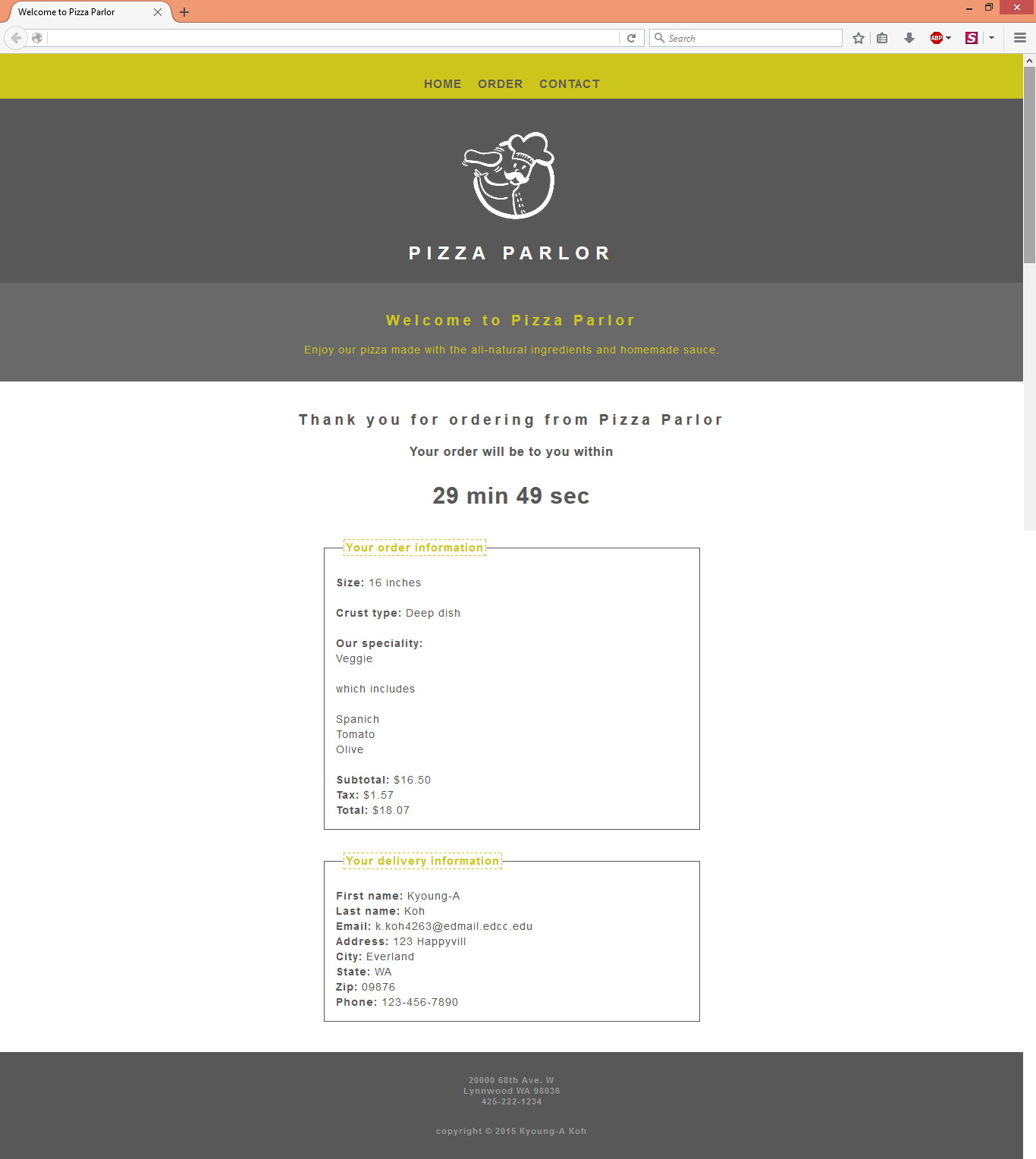
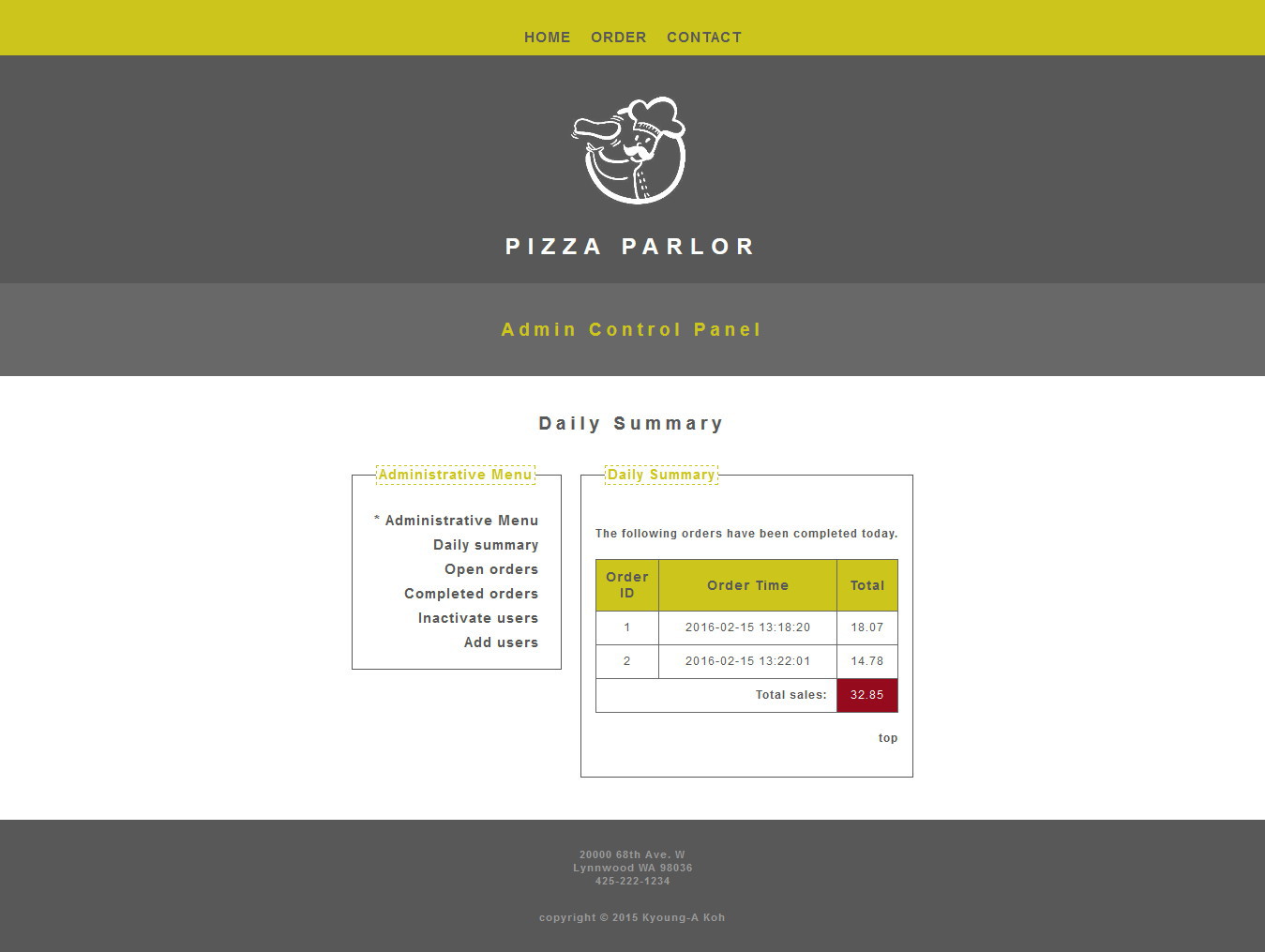
What I learned I learned basic concepts of JavaScript through this class. Many class exercises taught me how to use inline scripting, basic event handlers, document object model(DOM), arrays and a little bit of jQuery. Creating an interactive web site for Pizza Parlor was one of my favorite assignments. I was supposed to create a simple order page that allows customers order either a specialty pizza or a build-your-own pizza. When customers make a selection, the final price including total, subtotal, and tax will be calculated automatically and be displayed within a web page. Using JavaScript cookies, the order information will be stored and retrieved on the customer information and the order summary page. The biggest advantage of JavaScript is faster speed because it runs immediately on the users' processor instead of the web server. This practice helped me understand JavaScript expressions and functions a lot easier than I expected.
syllabus | JavaScript Expression Evaluator | Pizza Parlor (JavaScript)
*click to enlarge image*
CIS 243 - Web Development III: Introduction to PHP
Description Topics include server-side scripting for Web pages using PHP. Students will learn fundamentals of PHP scripting including functions, logical structure, and database connectivity used in creating websites.
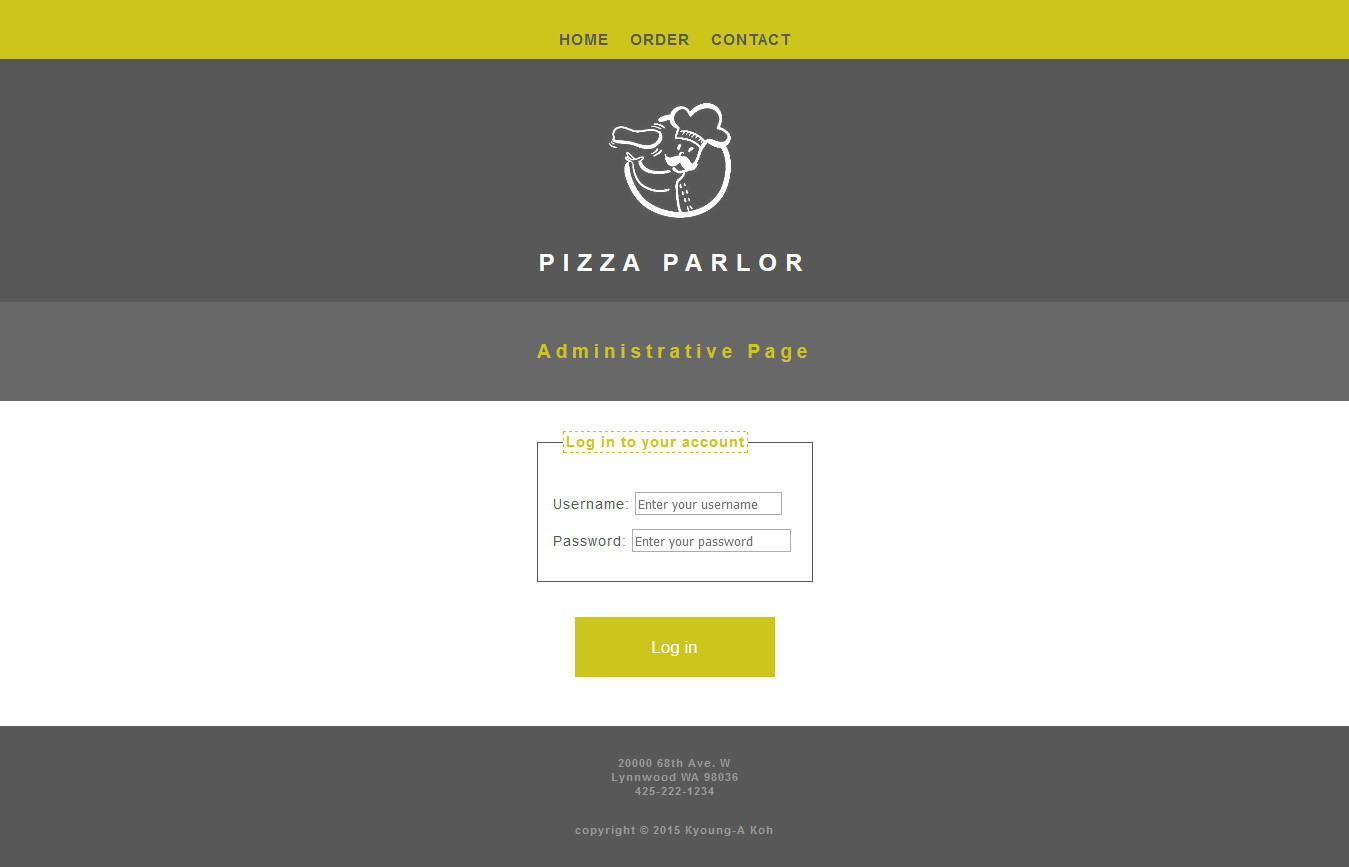
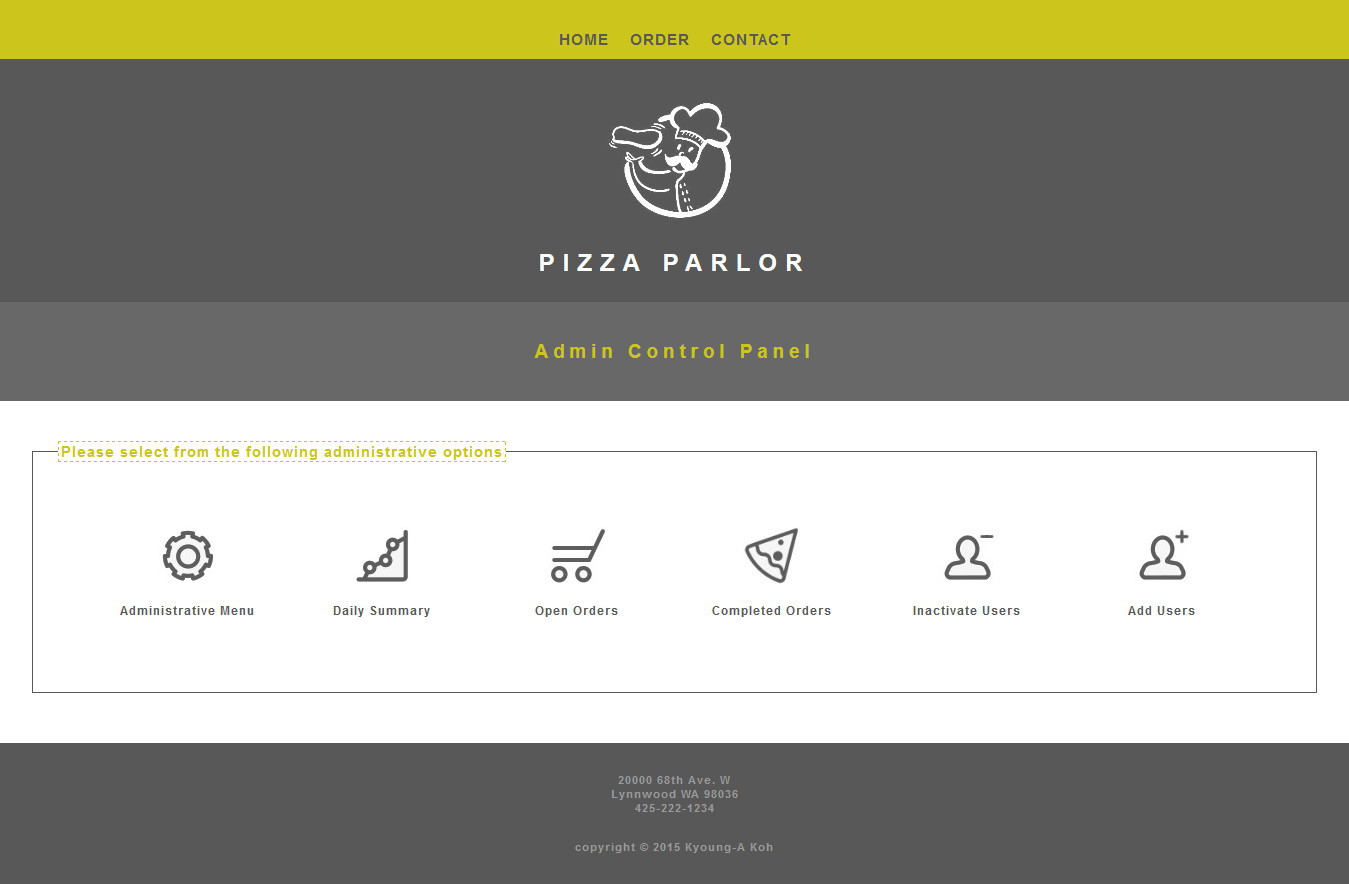
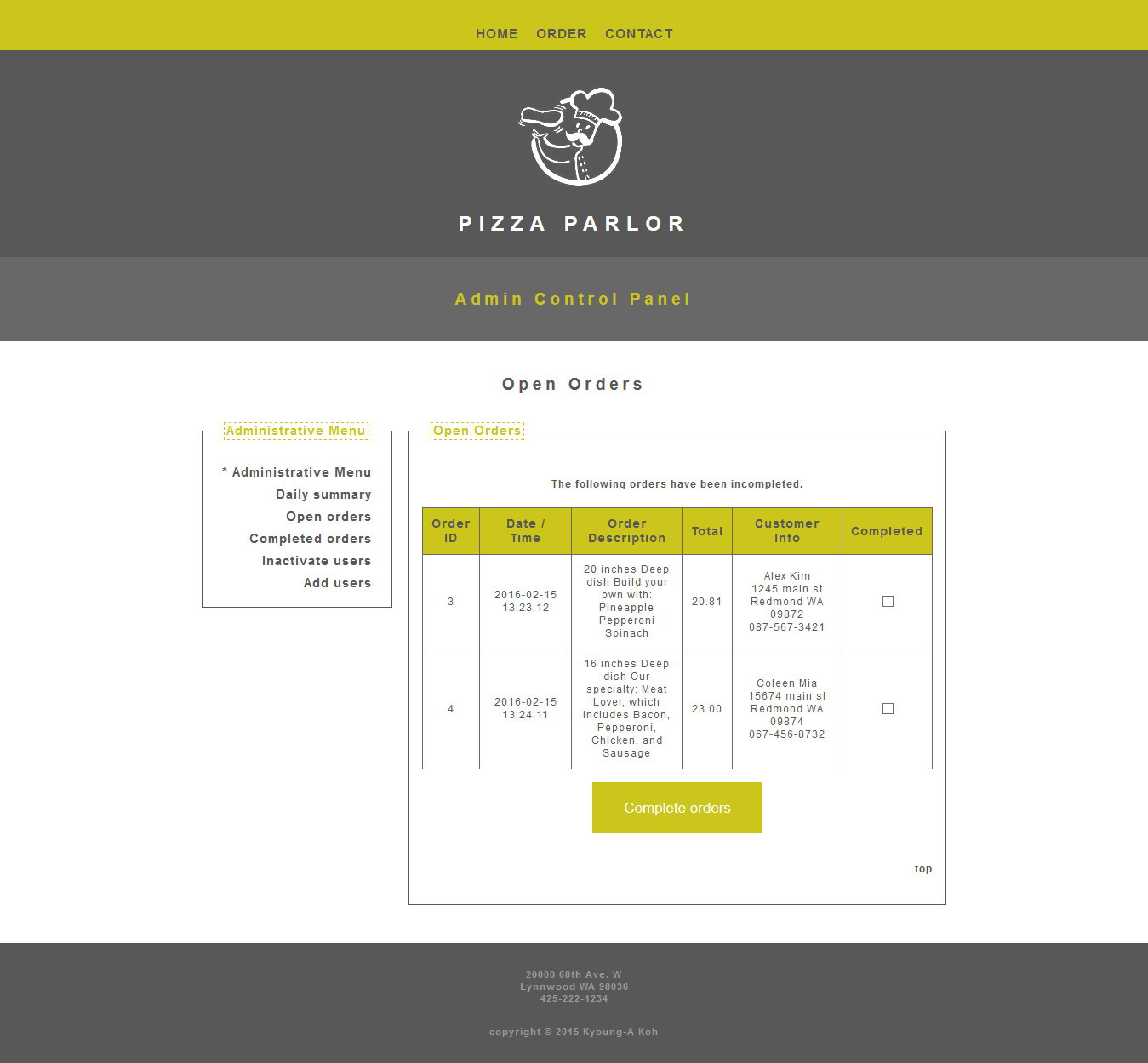
What I learned This class was a lot of fun but a real challenge after taking JavaScript class. For the final project, I added PHP script to the 'Pizza Parlor' project that I already completed through JavaScript class to create a database connectivity that is able to store information about customers, orders and administrators. I found that PHP also operates much fater than other scripting languages while dealing with a database. I could understand why PHP is wildely used for many web applications nowdays.
*click to enlarge image*
CIS 244 - Web Development IV: Introduction to Joomla! and SEO
Description Students will learn to work with open-source content management systems (CMSs) and search engine optimization (SEO). Topics include Joomla!, installation of Joomla!, creating and updating content, and SEO concepts and techniques. Students will apply these topics while building multi-page websites.
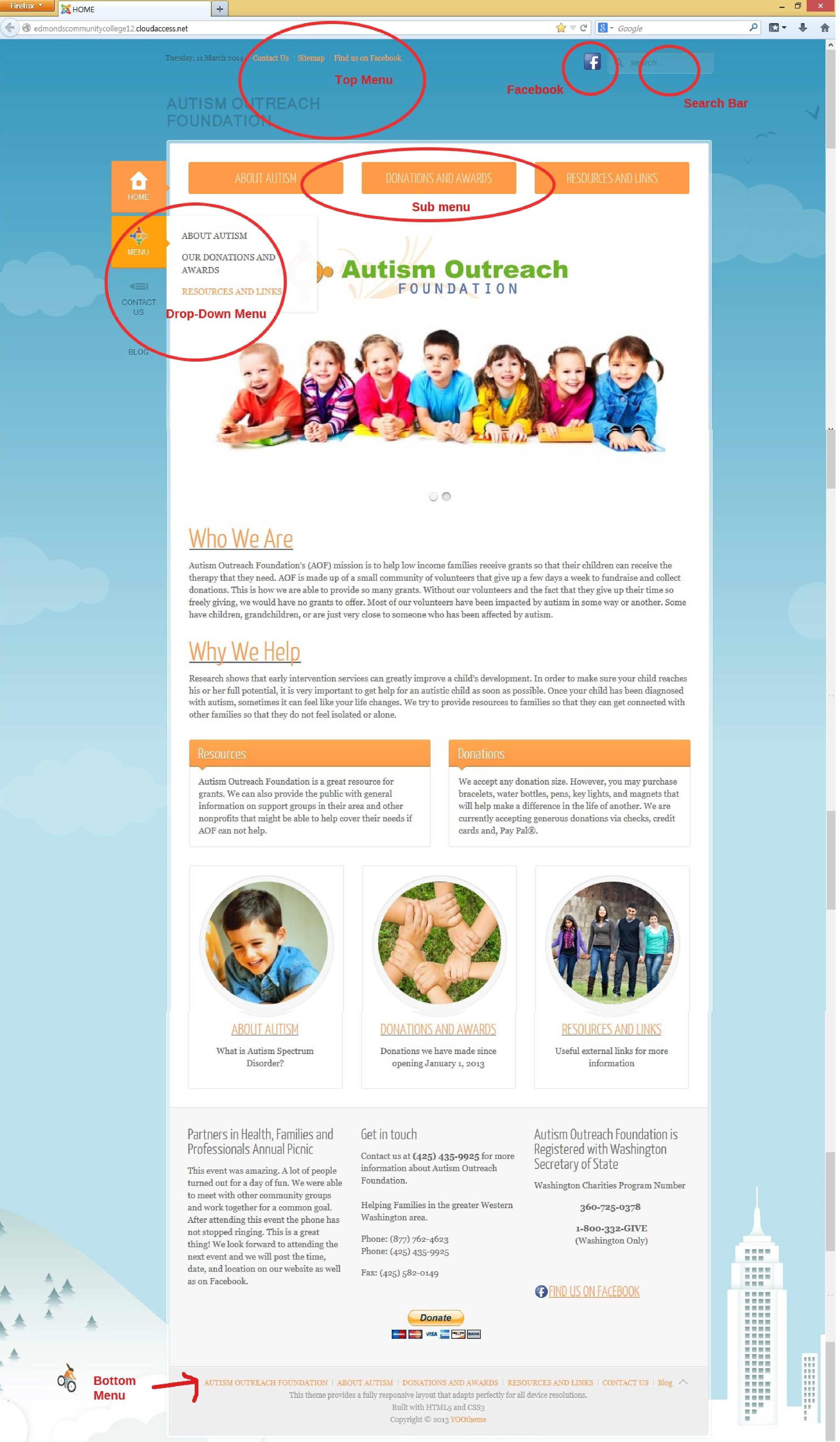
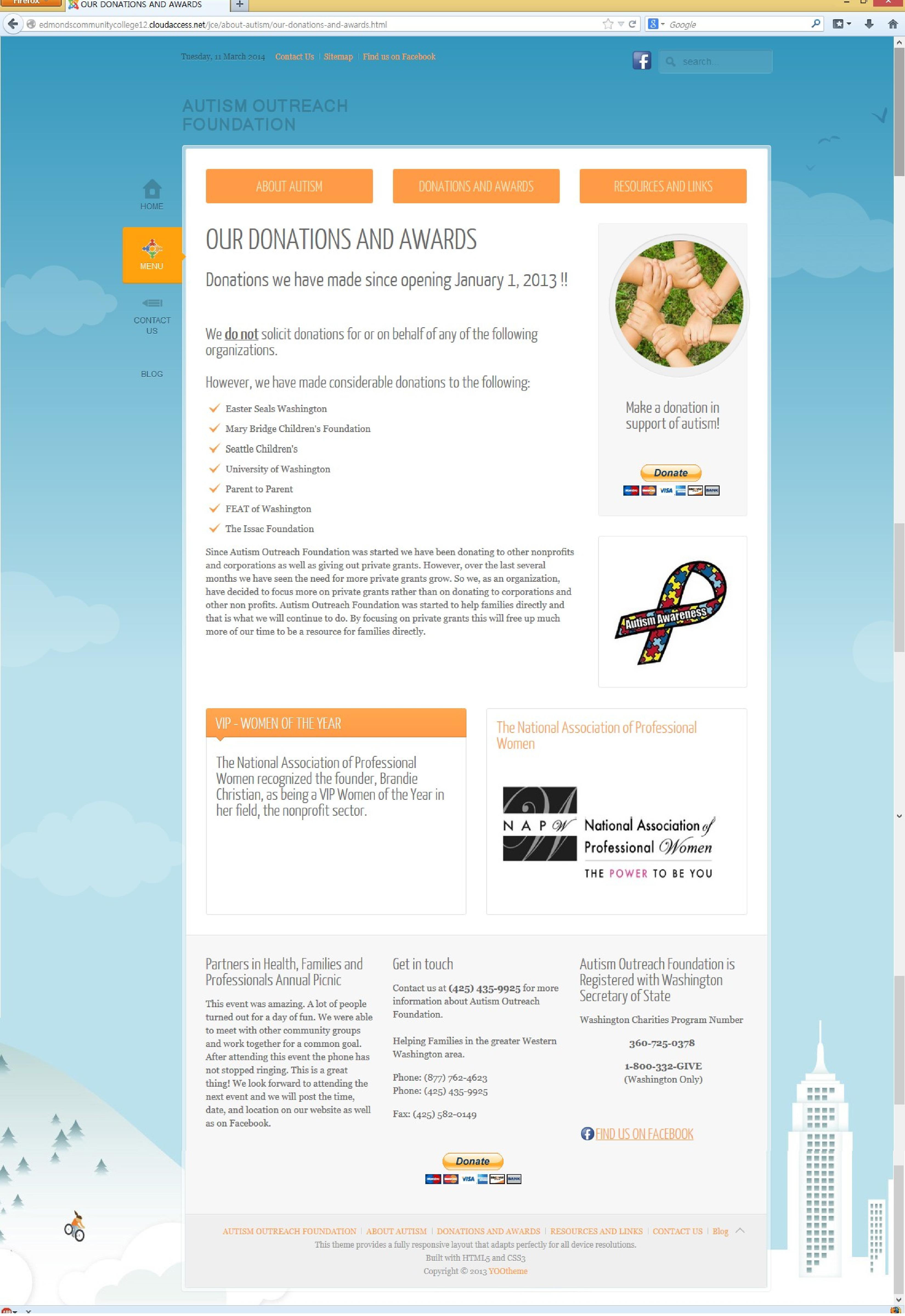
What I learned Through this class, I've gained all the knowledge and experiences of Content Management System called 'Joomla', which is a powerful tool that offers convenience when it comes to managing the content of websites as well as building the website structure. Joomla is more complex than WordPress however it is great for a professional website. Joomla helps the user customize a website easily with the template management tool and requires only 30 to 40 minutes to learn. Joomla is free to use and has many free extensions to improve websites with many resources.
*click to enlarge image*

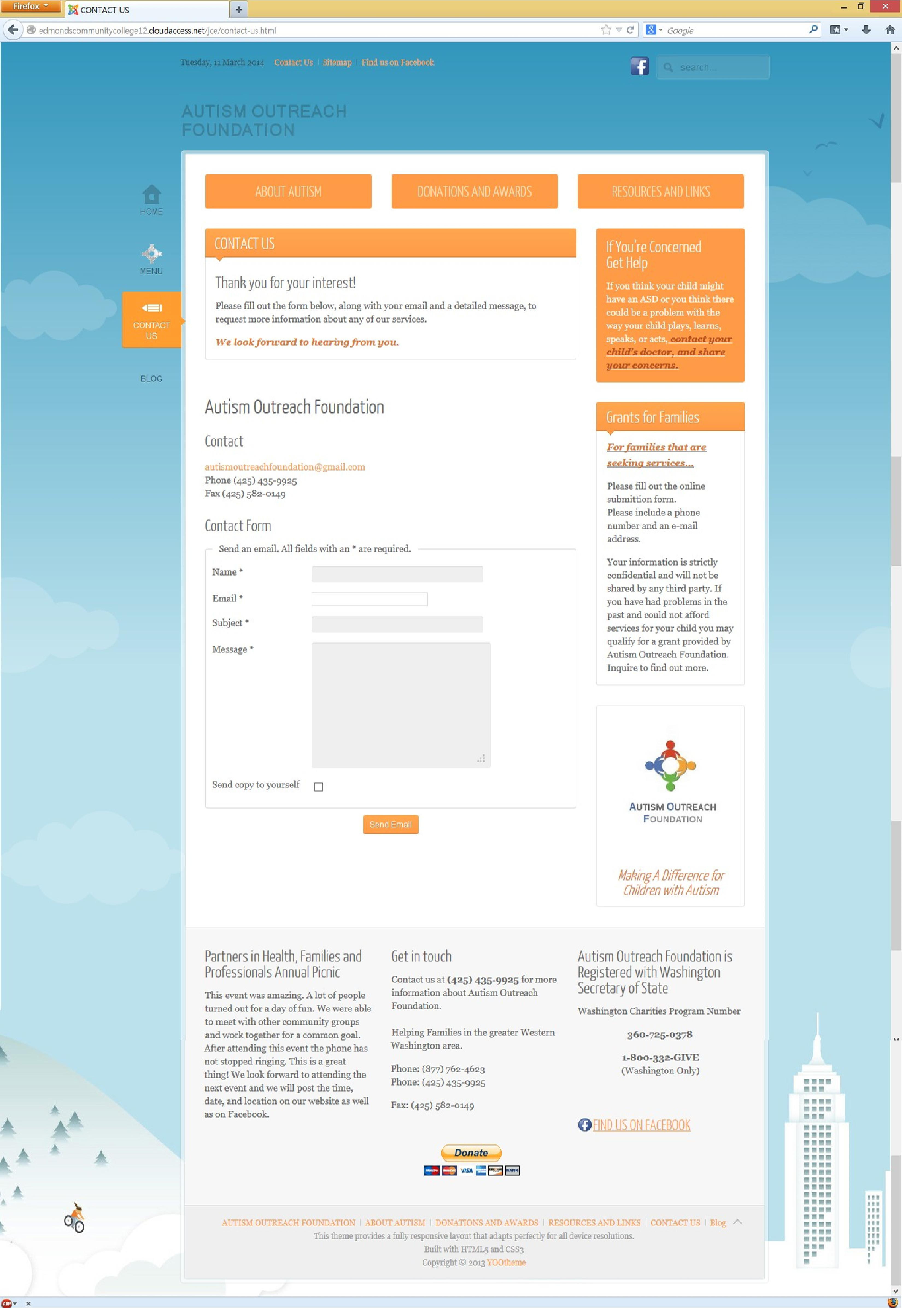
CIS 245 - Web Development V: Introduction to Cascading Style Sheets
Description Students will learn the details required to combine CSS (Cascading Style Sheets) with HTML, XHTML, or XML to create rich, powerful websites. Topics include: selectors, cascade and inheritance, text and font manipulation, layout, and positioning.
What I learned This is my favorite class that I have taken at EdCC. Learning CSS is absolutely fun and it works perfectly all the time. I think that CSS is a very simple and useful in applying unique styles without editing actual HTML codes of a website. One of the best things about CSS is that it allows the seperation of presentation and structure especially with external stylesheets. Another reason I like CSS is that it gives me freedom of naming all the attributes with desired id/class. That is a nice thing to play with my own tags.
*click to enlarge image*
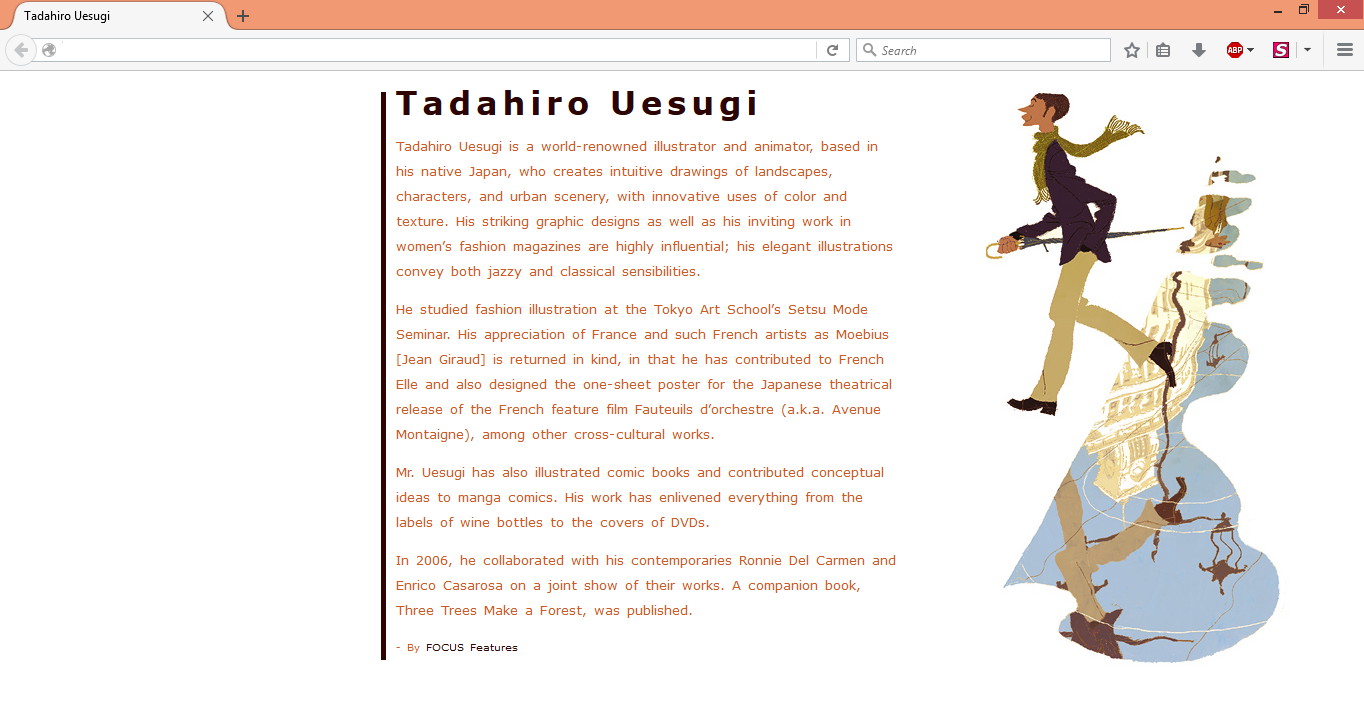
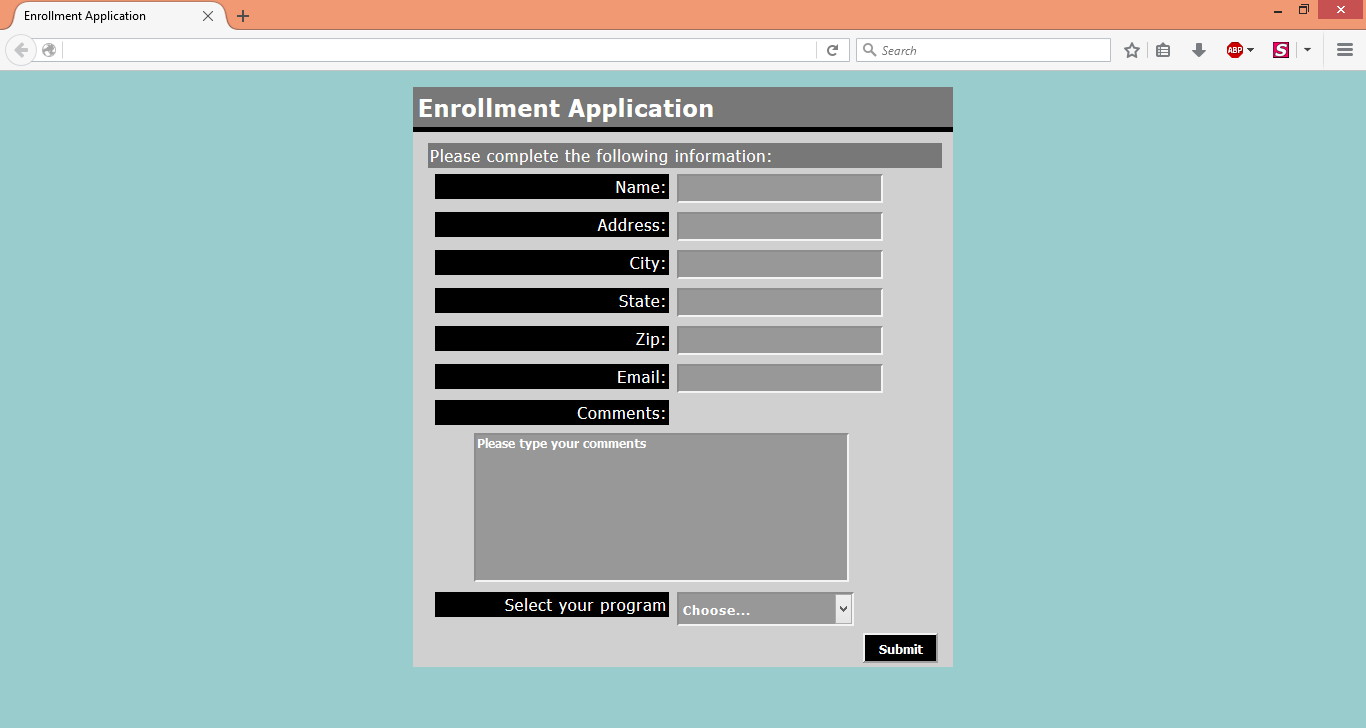


CIS 250 - Database Theory and Design
Description Designed to recognize data as a business resource. Database models are discussed from both a developer’s and a user’s viewpoint. Topics include: Conceptual and logical models, and data normalization through case studies.
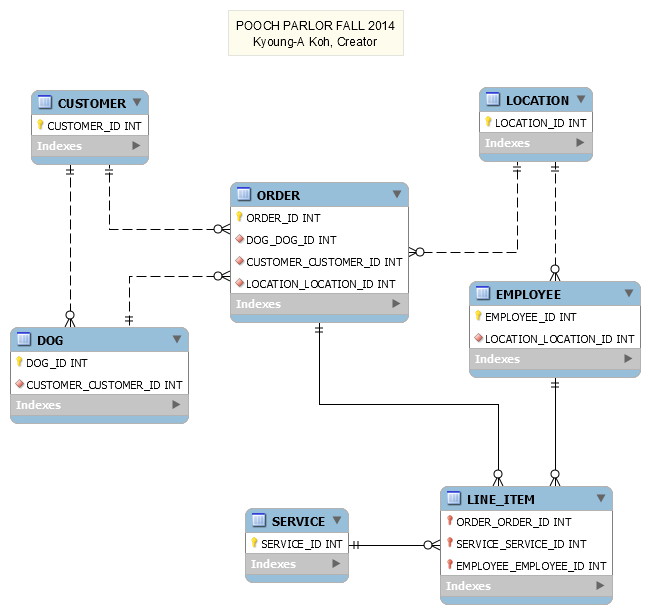
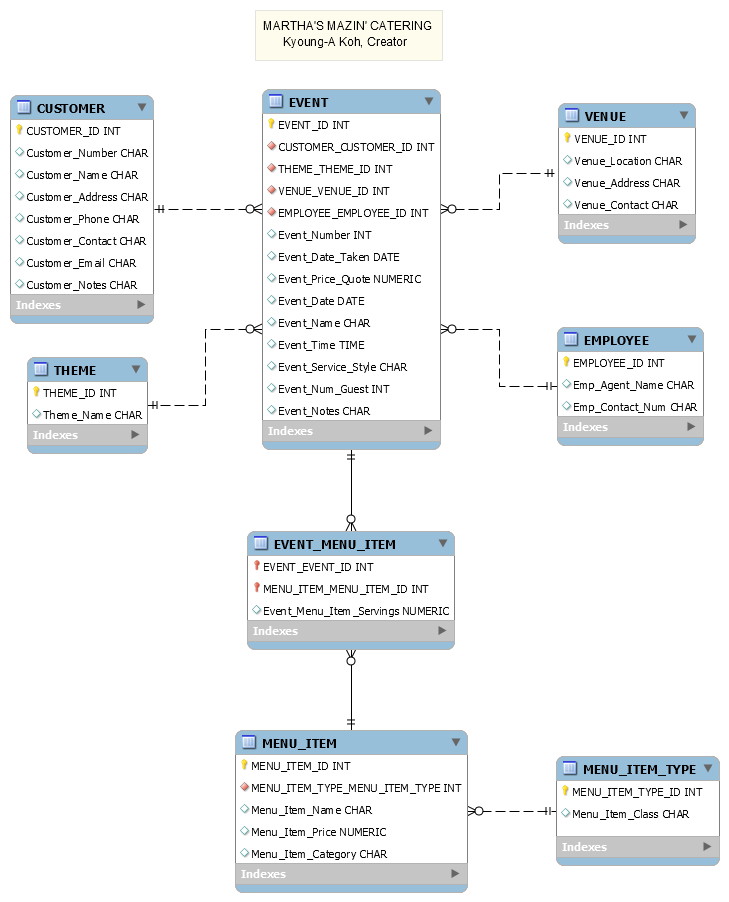
What I learned Cardinality in a relational database can be defined as the uniqueness of data values contained in a colum of a table. If a column with very unique values such as ID numbers or user names, it can be called high-cardinality. On the other hand, if a column with very few unique values, it is considered as low-cardinality. There are the four basic cardinality relationships between tables - 1:1(one-to-one), 1:M(one-to-many), M:N(many-to-many) and M:N:M(many-to-many-to-many). In a 1:M relationship, a row in a table can be associated with other rows in another table. This relationship is mostly used when creating a relational database.
*click to enlarge image*
CIS 251 - Structured Query Language (SQL)
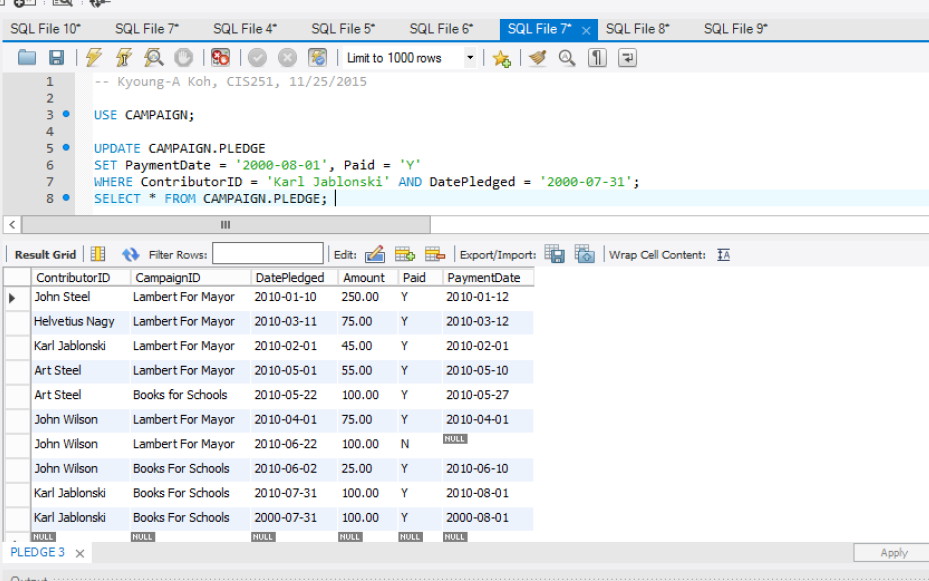
Description Covers topics in Structure Query Language (SQL) including statements such as select, update, insert, delete, create. Emphasis on the ability to extract, update and maintain databases using SQL.
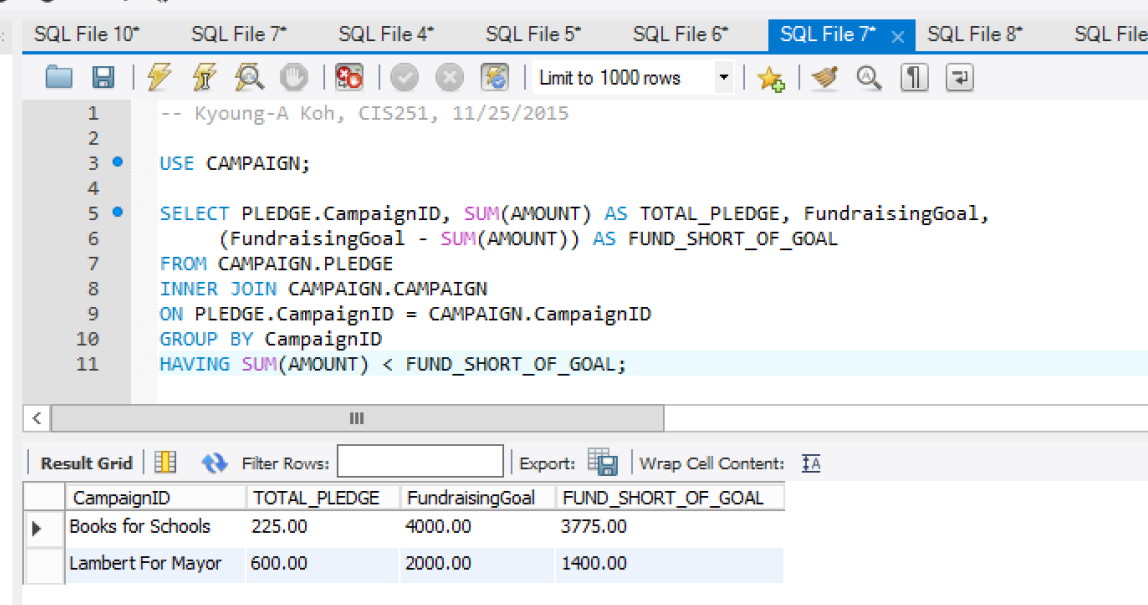
What I learned I learned how to create a relational database tables and insert data into tables using SQL statements. The most memorable SQL expressions were SELECT statements. There are several important rules when using SELECT statements. Each select statement consists of at least the select clause. The other clauses, such as WHERE, GROUP BY and ORDER BY are optional however if these clauses are used within SELECT statements, FROM clauses are required. It is also important to follow the order of the clauses within SELECT statements.
*click to enlarge image*
CIS 260 - Introduction to XML
Description Topics include how XML is used in websites and data storage applications, XSL, incorporating style with XSL and CSS, namespaces, DTDs and schemas.
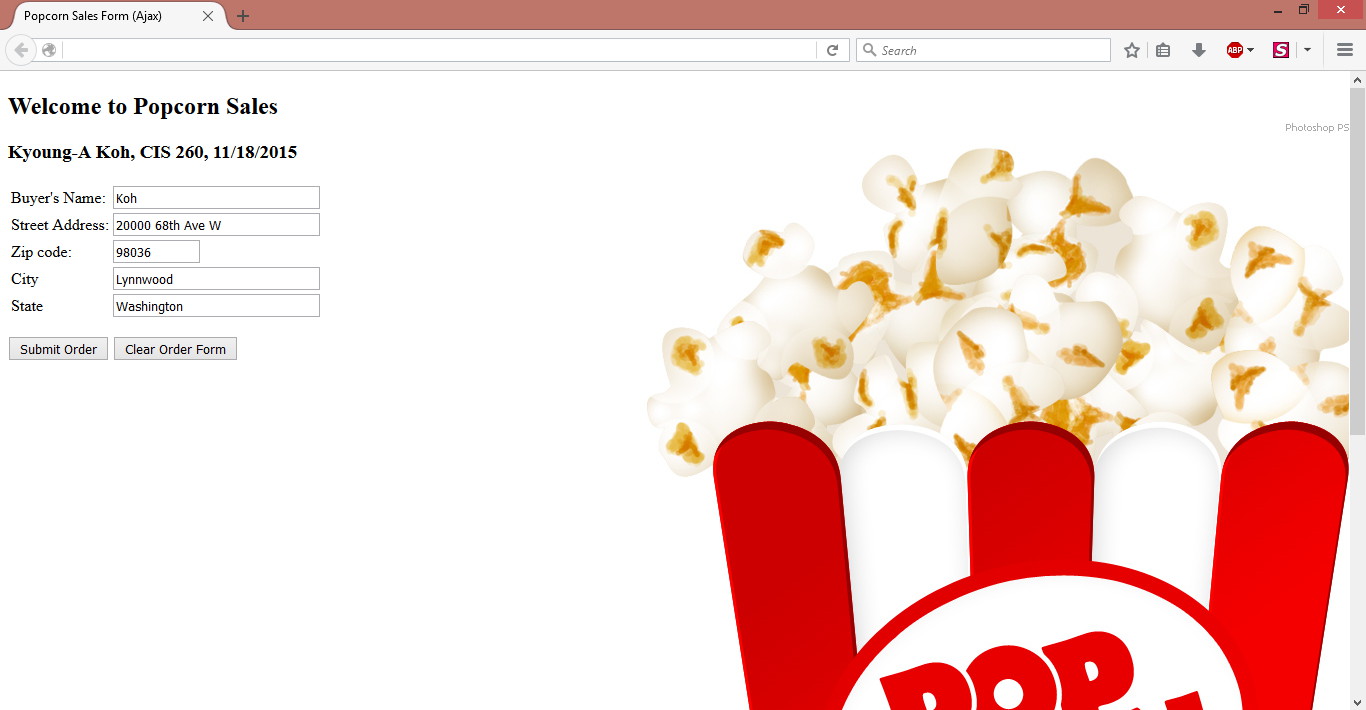
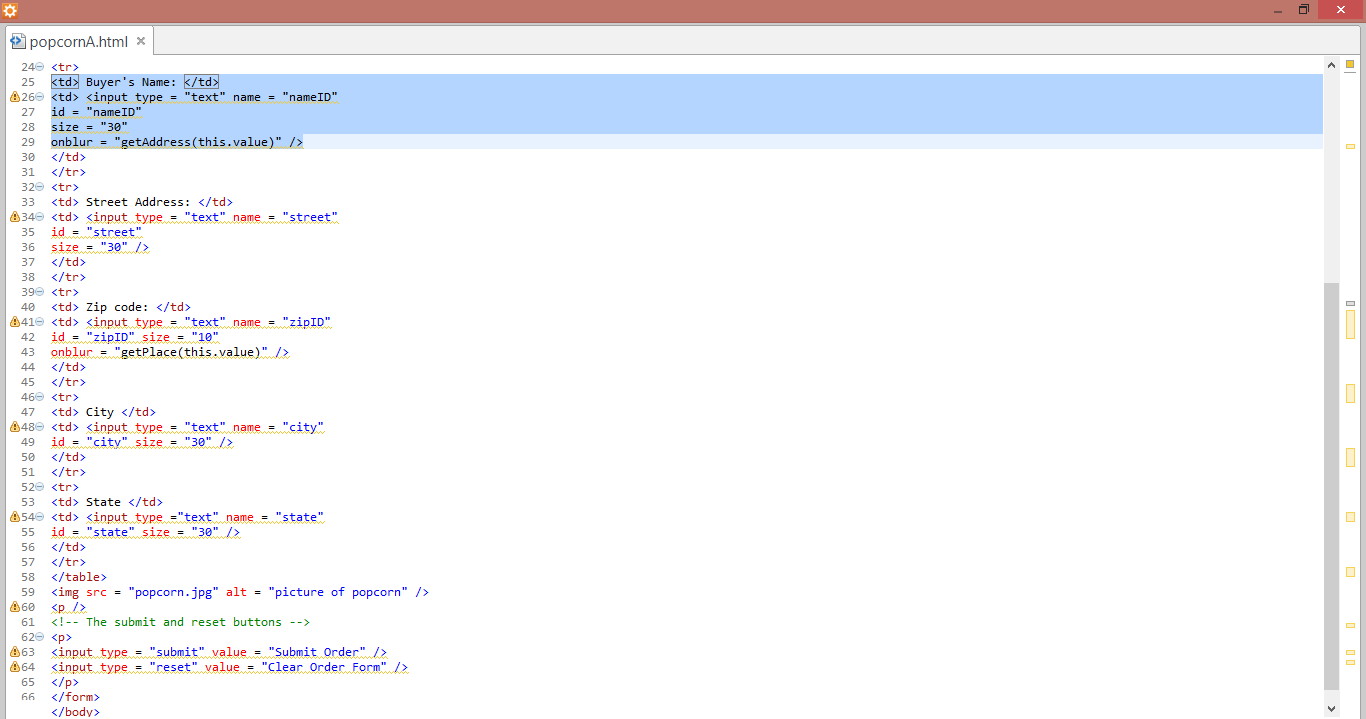
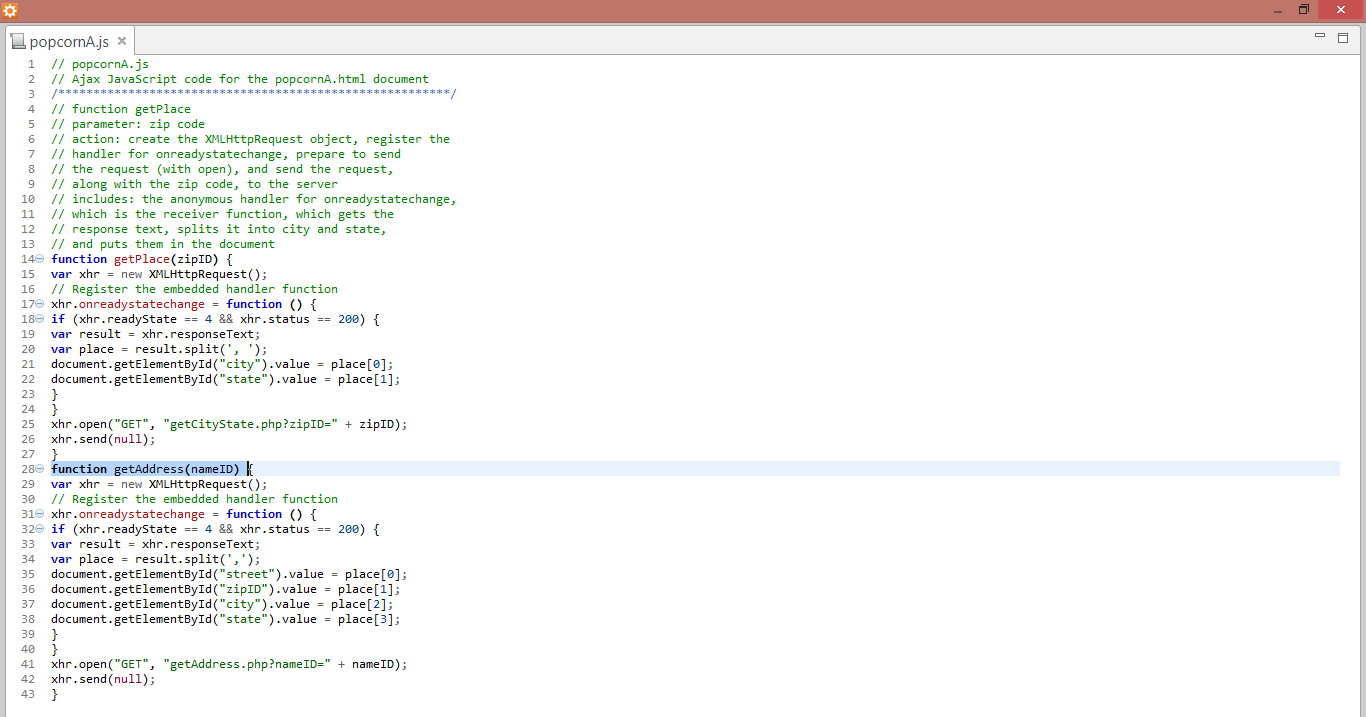
What I learned I learned the most useful information of XML from this class. XML allows developers to make formats readable by both humans and machines. There are two main types of XML formats. One is used for storing data and the other is used for adding metadata such as XHTML. XML also has many XML Schemas to validate documents are in the correct format. XML Schemas allows authors to validate text element content and user-defined data type. It can be used more effectively when creating complex content models.
*click to enlarge image*