Below are some of the courses that were part of my Web Application Developer Degree at Edmonds Community College.
HTML
COURSE DESCRIPTION
Internet and intranet Web site development using XHTML approached from a source code perspective. Covers tags, forms, linked objects, CSS, frames, tables, and introduction to the use of scripting. Students build multi-page Web sites. Prerequisite: CIS 100 and CS 115 or concurrent enrollment with minimum grades of 2.5 or equivalent.
WHAT I LEARNED
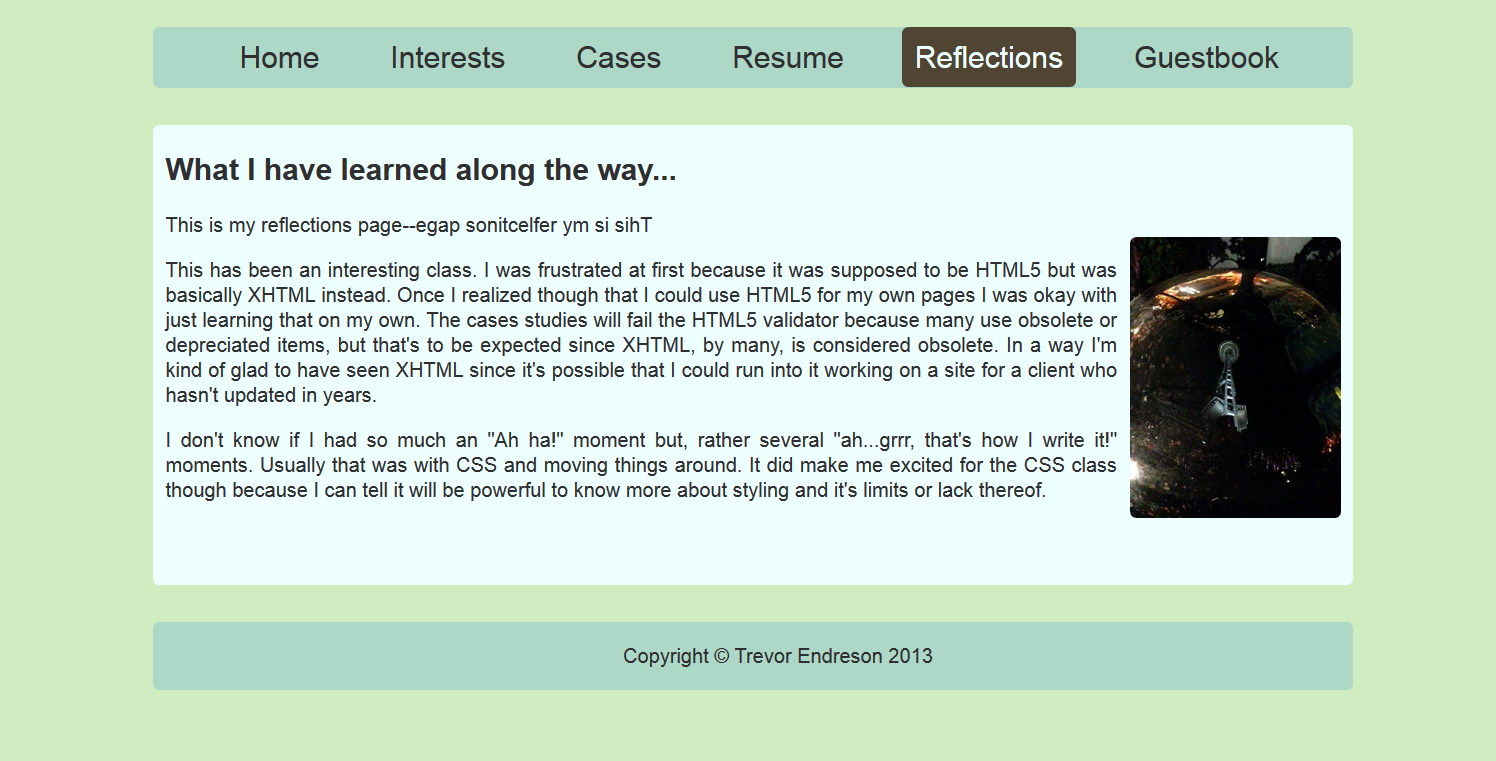
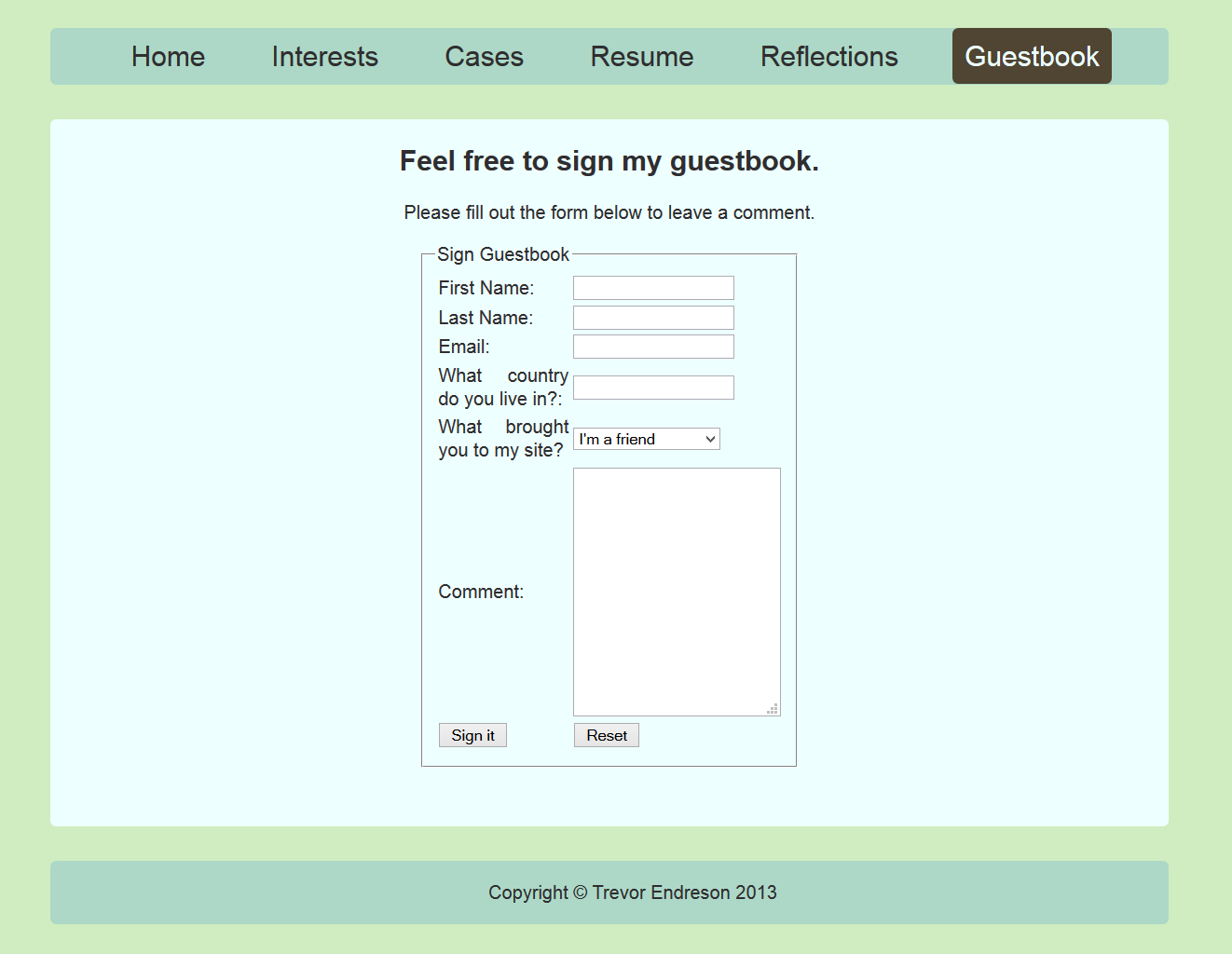
This class established the basics of HTML. We started by touching on XHTML briefly since it still out there in the wild. The various elements that make up the HTML standard were used to create a website over the quarter. I continue to build on my HTML skills and I look forward to learning more about HTML5.
SCREENSHOTS OF HTML EXERCISES
SYLLABUS
Javascript
COURSE DESCRIPTION
Topics include: Client-side scripting for web pages using JavaScript. Students will learn to create embedded, inline and external scripts, rollovers, user-defined functions, DHTML form verification and cookies. Prerequisite: CIS 241 with a minimum grade of 2.5 or equivalent experience.
WHAT I LEARNED
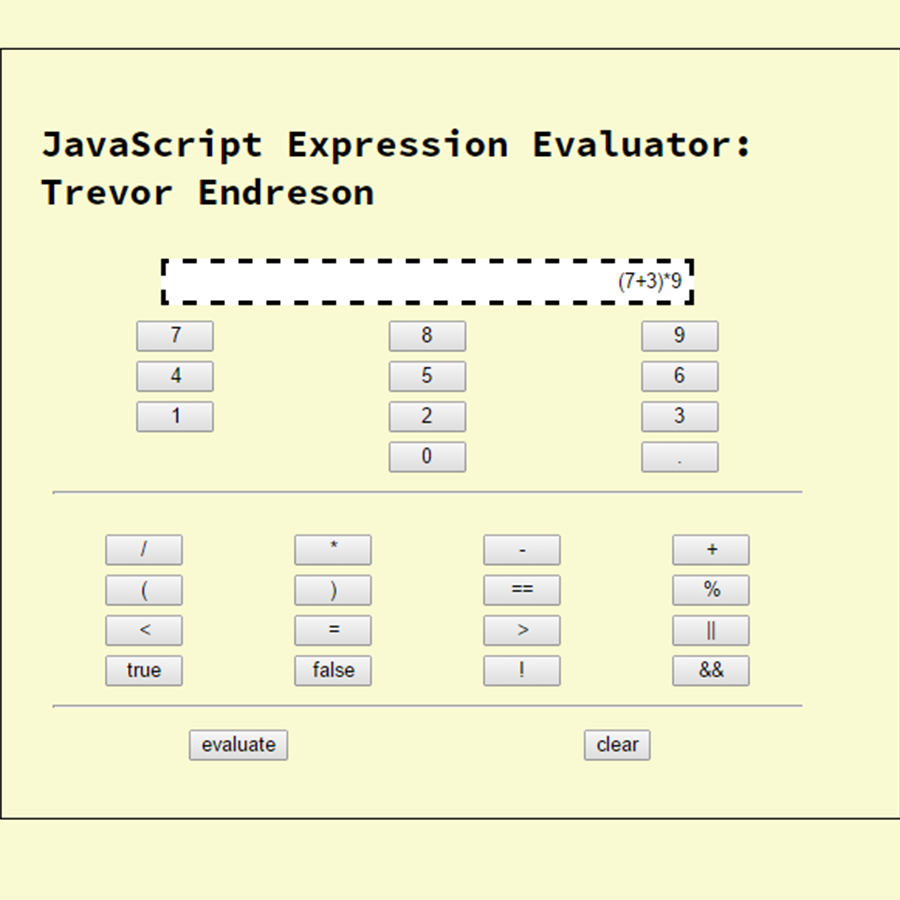
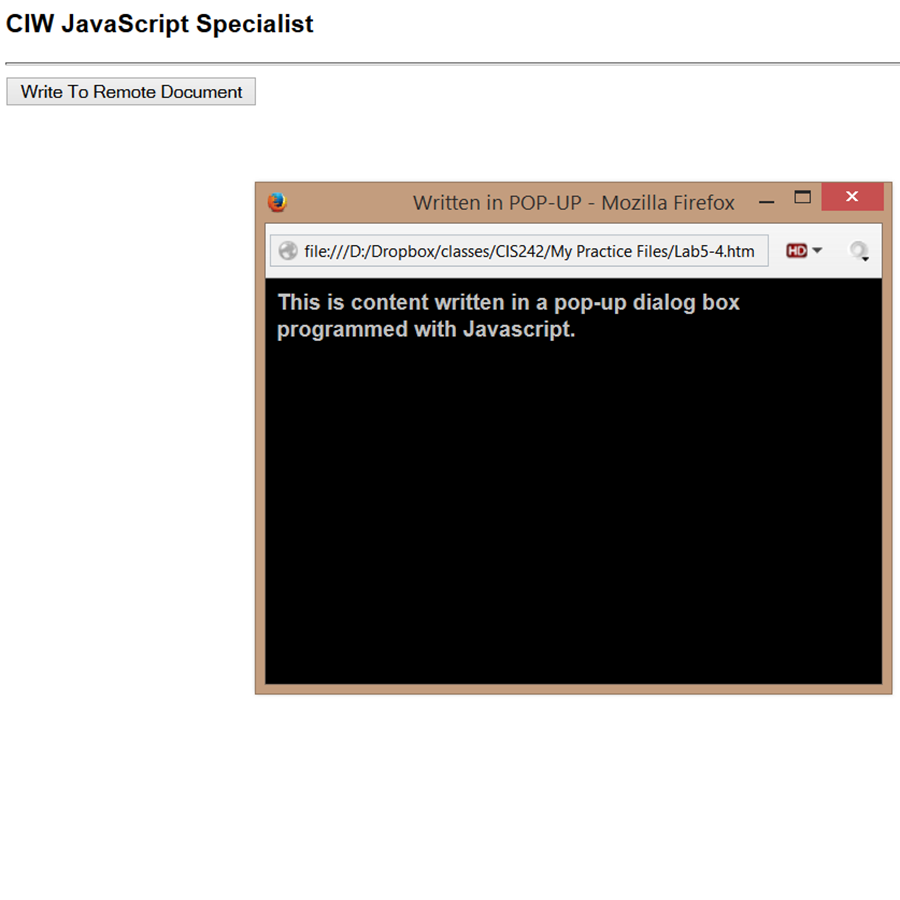
I learned that Javascript can be used for way more than the alert boxes. During this course we created an expression evaluator, which was able to implement various math functions. We also created a modal box, which allowed the user to change the background-color and color of a remote window. These exercises, along with the final 'pizza parlor' assignment, introduced me to the power that javascript provides. Seeing javascript mature as a language has solidified my desire to make it one of my core skills.
SCREENSHOTS OF JAVASCRIPT EXERCISES
SYLLABUS
Javascript II
COURSE DESCRIPTION
Students will investigate and use the advanced techniques available in JavaScript Frameworks (libraries) such as jQuery, AJAX, MooTools and Prototype. Prerequisite: CIS 242 and 260 with minimum grades of 2.5 or equivalent experience.
WHAT I LEARNED
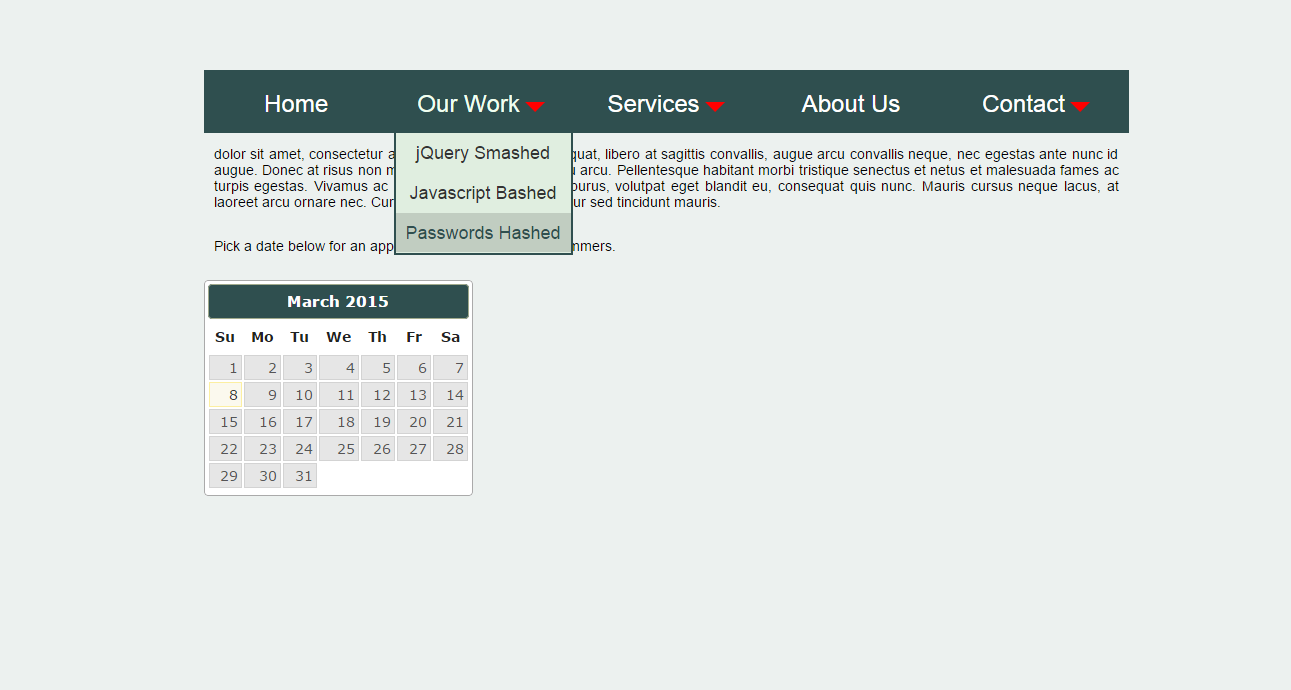
Learning jQuery has placed very valuable tool in my programming toolbox. jQuery, in a way, can be thought of as shorthand javascript. The thing that is important about that is that it simplifies things that can be complicated or long to write in vanilla javascript. One of the key features about jQuery that I learned is that it leverages CSS selectors which makes function targeting very simple. It also provides filters and smooths browser inconsistencies by "baking in" fixes. Javascript is continuing to make new additions with each release, which make parts of jQuery less relevant, but jQuery will be useful for a very long time.
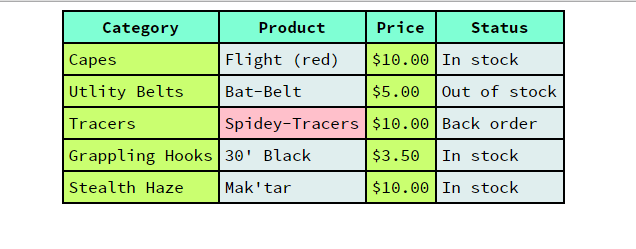
SCREENSHOTS OF JSII EXERCISES
SYLLABUS
CSS
COURSE DESCRIPTION
Students will learn the details required to combine CSS (Cascading Style Sheets) with HTML, XHTML, or XML to create rich, powerful web sites. Topics include: selectors, cascade and inheritance, text and font manipulation, layout, and positioning. Prerequisite: CIS 241 with a minimum grade of 2.5 or equivalent experience.
WHAT I LEARNED
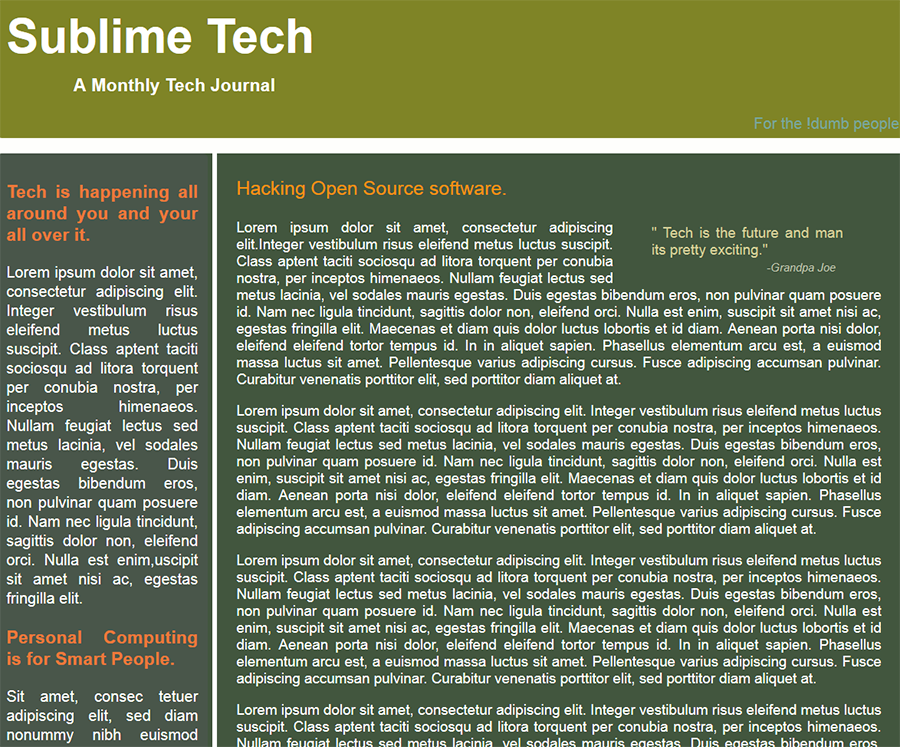
This class taught me the basics of CSS. As anyone that knows CSS can attest to, learning CSS is no easy task. It is easy to learn simple things like changing colors, adding classes, id’s, padding, margins and borders to elements. It is another thing to become skilled at the more challenging concepts CSS implements. I learned that, in the same way that some behaviors in mathematics can be hard to visualize, behaviors of the box model can be hard to visualize also. But, just like mathematics, how the box model behaves becomes more predictable with knowledge and practice.
SCREENSHOTS OF CSS EXERCISES

SYLLABUS
Database Theory and Design
COURSE DESCRIPTION
Designed to recognize data as a business resource. Database models are discussed from both a developer's and a user's viewpoint. Topics include: Conceptual and logical models, and data normalization through case studies. Prerequisite: Twenty credits toward an ATA degree or certificate or CIS 116, or equivalent experience.
WHAT I LEARNED
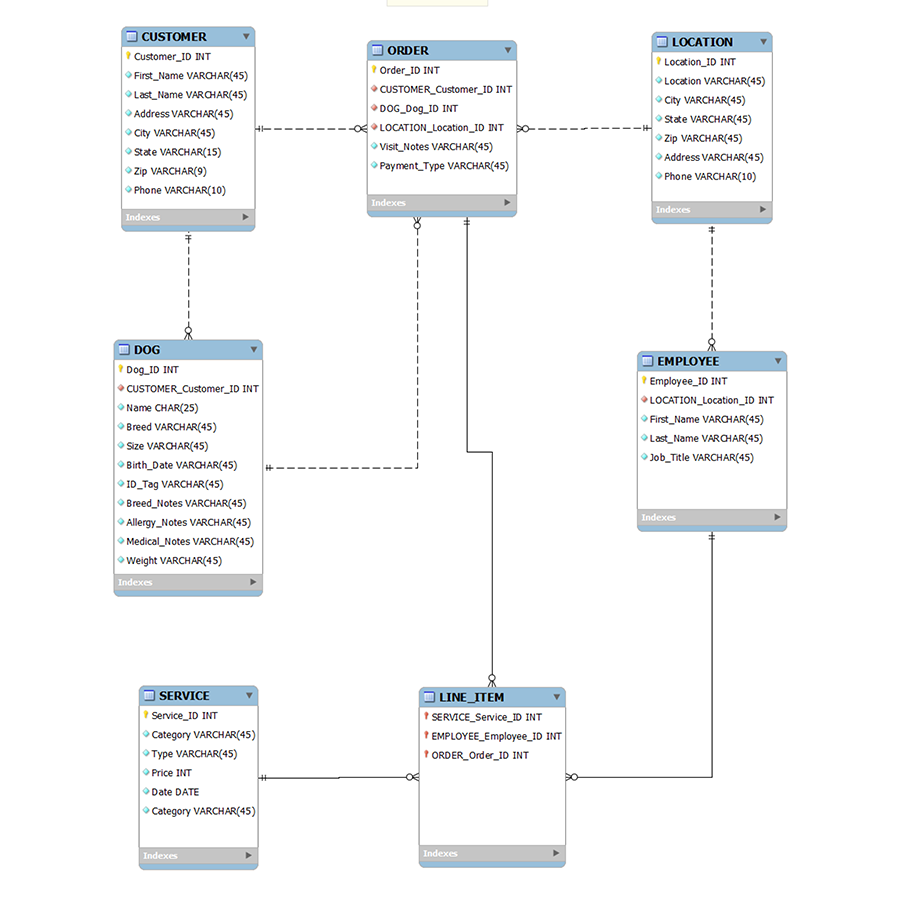
I learned about the fundamental concepts behind creating relational databases. Some of these concepts include, normalization, tables, keys, values, records, fields, indexes, table relationship types, and business rules. The ongoing class assignment started with an imaginary company that needed to replace their use of Excel with a relational database and culminated designing an ERD in 3NF.
SCREENSHOTS OF DATABASE DESIGN EXERCISES

SYLLABUS
PHP
COURSE DESCRIPTION
Topics include: Server-side scripting for web pages using PHP. Students will learn fundamentals of PHP scripting including functions, logical structure, and database connectivity used in creating web sites. Prerequisite: CIS 242 with a minimum grade of 2.5 or equivalent experience. Additional Information about the course: Using PHP and mySQL, students build database driven websites. Topics include PHP structure, functions, procedures, and database connectivity, and setting up a mySQL database to work with a Web server. While this course uses PHP to teach the ideas of server-side scripting and database connectivity, the theories learned here apply to all server-side Web technologies. Other similar technologies include: ASP, ASP.NET, JSP, Cold Fusion. All of these technologies are valid and useful. Use of these technologies is yours and your employer's preference. Prerequisite: CIS 242 with a minimum grade of 2.5 or equivalent experience.
WHAT I LEARNED
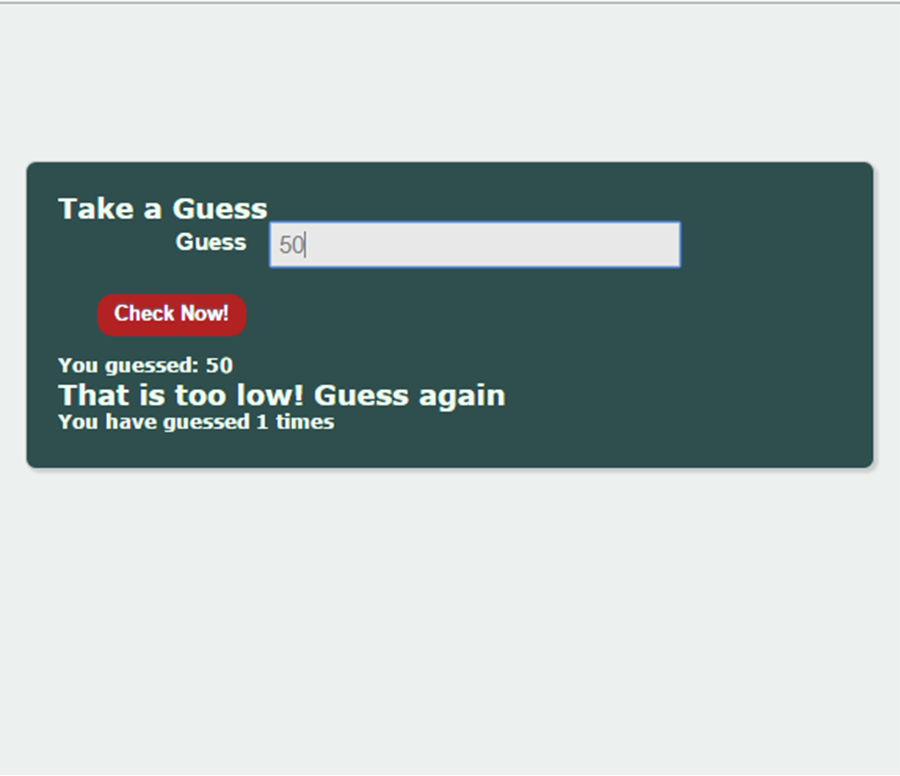
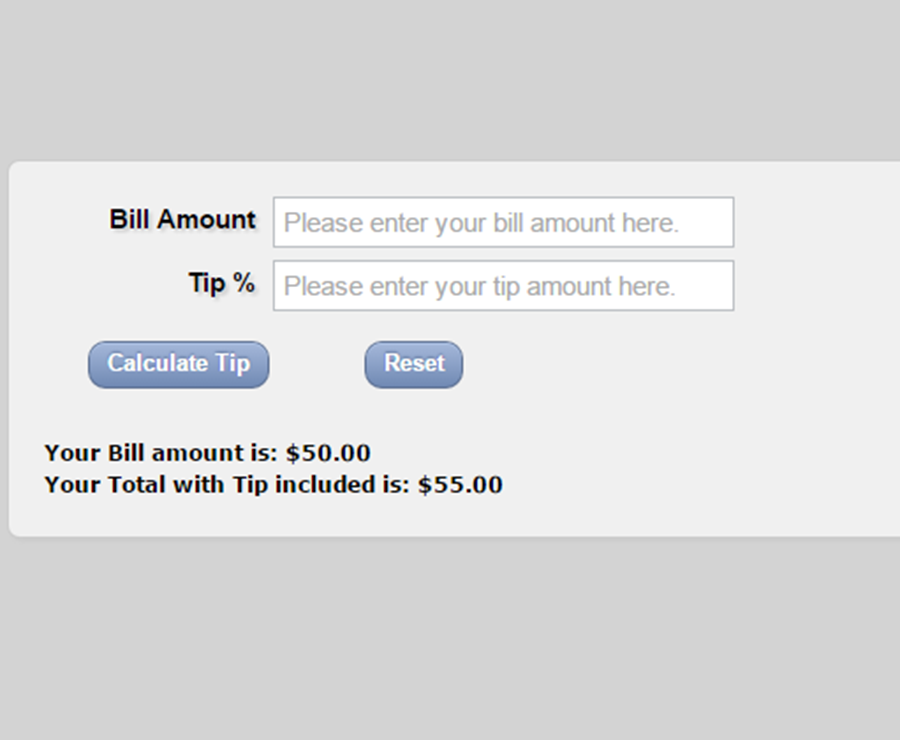
PHP has a huge presence as a server-side language. Learning how to implement the CRUD process in PHP is invaluable to me. I know that many speak negatively about PHP, but in the end it, like any other language, is a tool to be used for the proper task. It is quick to implement into a workflow and has broad support. I intend to continue to build my PHP knowledge in the future.
SCREENSHOTS OF HTML EXERCISES
SYLLABUS
SEO
COURSE DESCRIPTION
Internet and intranet Web site development using XHTML approached from a source code perspective. Covers tags, forms, linked objects, CSS, frames, tables, and introduction to the use of scripting. Students build multi-page Web sites. Prerequisite: CIS 100 and CS 115 or concurrent enrollment with minimum grades of 2.5 or equivalent.
WHAT I LEARNED
I learned that there trying to be all-knowing when it comes to search engine optimization is futile. Google changes their search algorithm hundreds of times a year. In my opinion this is a good thing. The fundamental things like, writing relevant content, creating new content frequently; and having legitimate, quality backlinks will always carry the most weight.
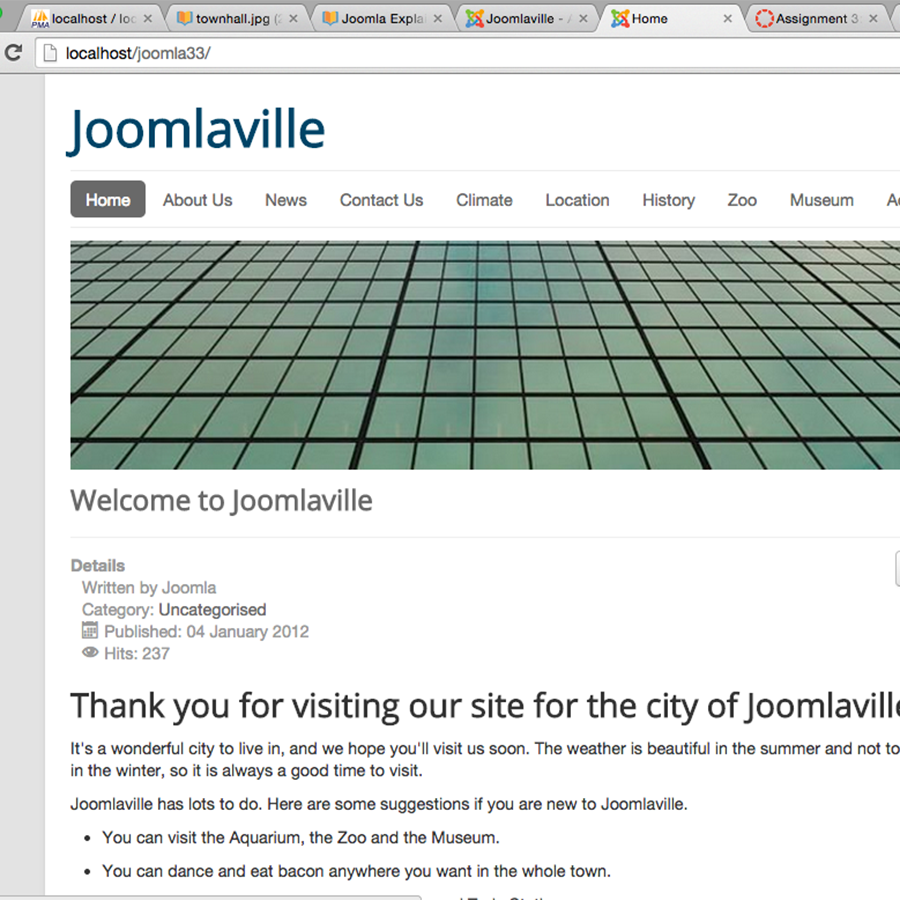
SCREENSHOTS OF HTML EXERCISES
SYLLABUS
XML
COURSE DESCRIPTION
Topics include how XML is used in Web sites and data storage applications, XSL, incorporating style with XSL and CSS, Namespaces, DTDs and Schemas. Prerequisite: CIS 100 and CIS 114 with minimum grades of 3.0 or equivalent.
WHAT I LEARNED
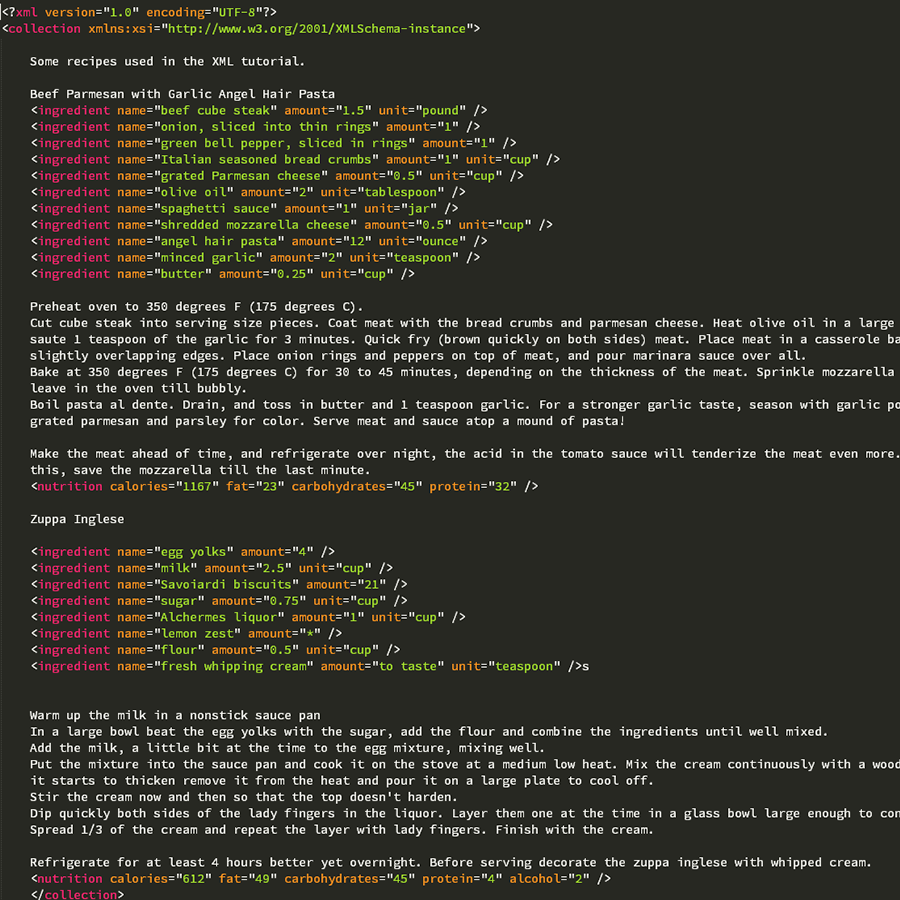
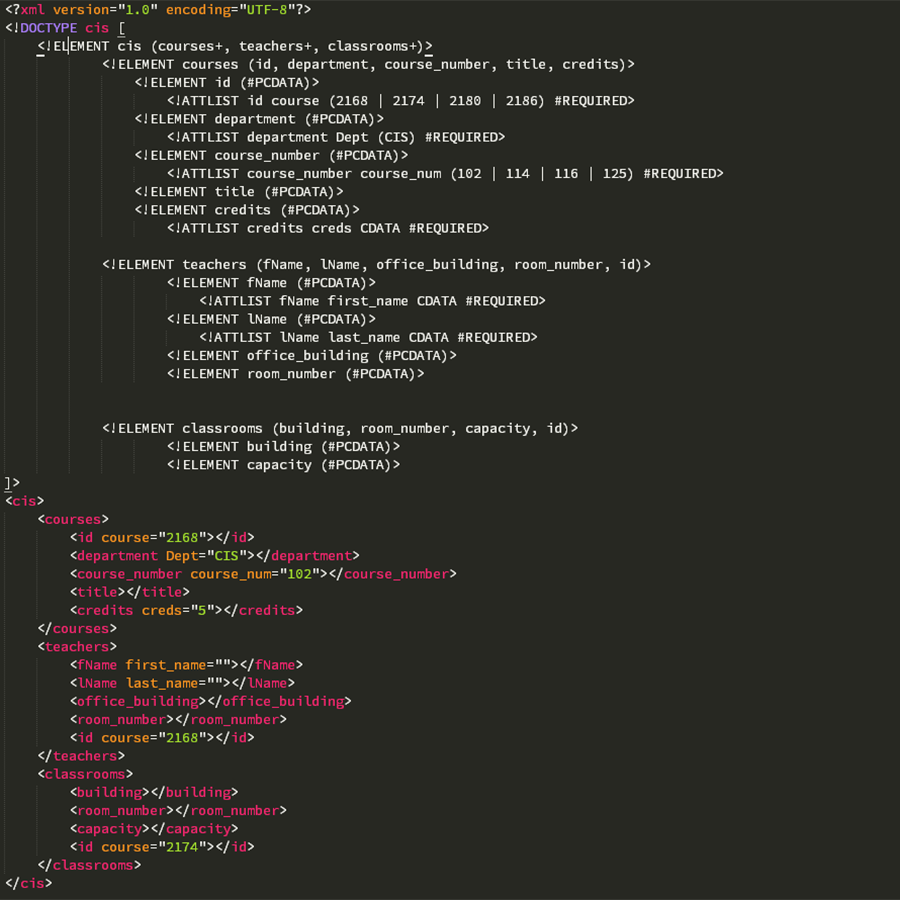
I learned that XML can be used to create documents that use custom data elements which mean something to the creator. XML is not constrained to predefined tags so creators can use names that mean something to them. Since XML is a standardized language, data can be shared between users. Namespaces and other constraints are in place to eliminate conflicts between elements from different sources. I look forward to leaning more about XML and using it in future projects.
SCREENSHOTS OF XML EXERCISES
SYLLABUS
SQL
COURSE DESCRIPTION
Covers topics in Structure Query Language (SQL) including statements such as select, update, insert, delete, and create. Emphasis on the ability to extract, update and maintain databases using SQL. Prerequisite: CIS 250 with a minimum grade of 2.5 or equivalent.
WHAT I LEARNED
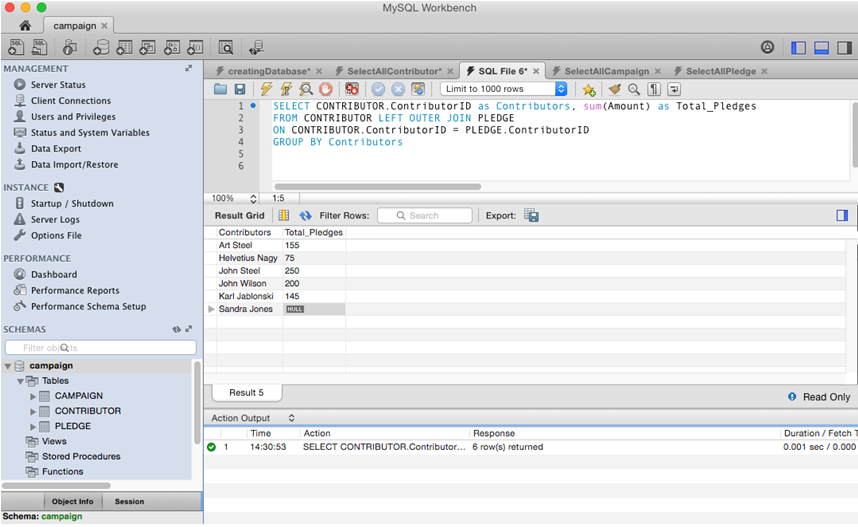
I was glad to add more SQL knoweldge to skill set. Using a varaity of SQL statements we created a database and populated it with multiple tables. Over the course of the quarter we performed many different operations on the database using SQL. These included selecting, updating, inserting, and deleting data extracted using proper SQL statements.
SCREENSHOTS OF SQL EXERCISES

SYLLABUS
JAVA
COURSE DESCRIPTION
Introduction to Java programming. Topics include basic Java Syntax, data types, control structures, methods, object representation using classes, graphics, Applets and Arrays, all within a framework of general object-oriented programming principles.
WHAT I LEARNED
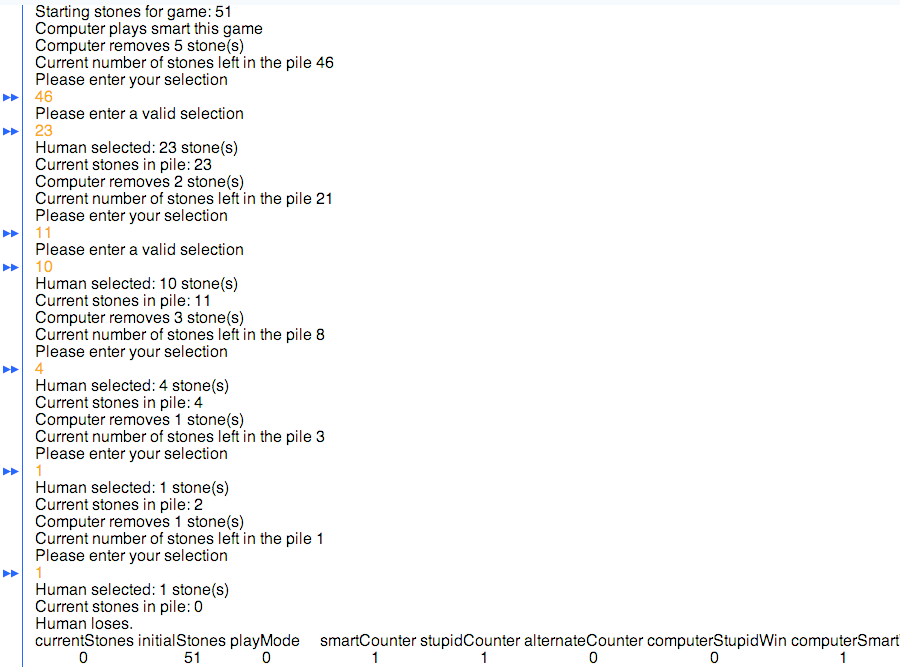
I learned more about programming fundamentals in this class. Objects, classes, methods and the more basic things like variables, loops were covered also. Learning about objects was rewarding an has helped me to see the similarities in other languages. Though my degree is in web development, traditional programming languages and usages are very interesting to me and enjoyable to learn and use. This class helped further my intention to continue to learn programmatic techniques and apply them to web development.
SCREENSHOTS OF JAVA EXERCISES

SYLLABUS